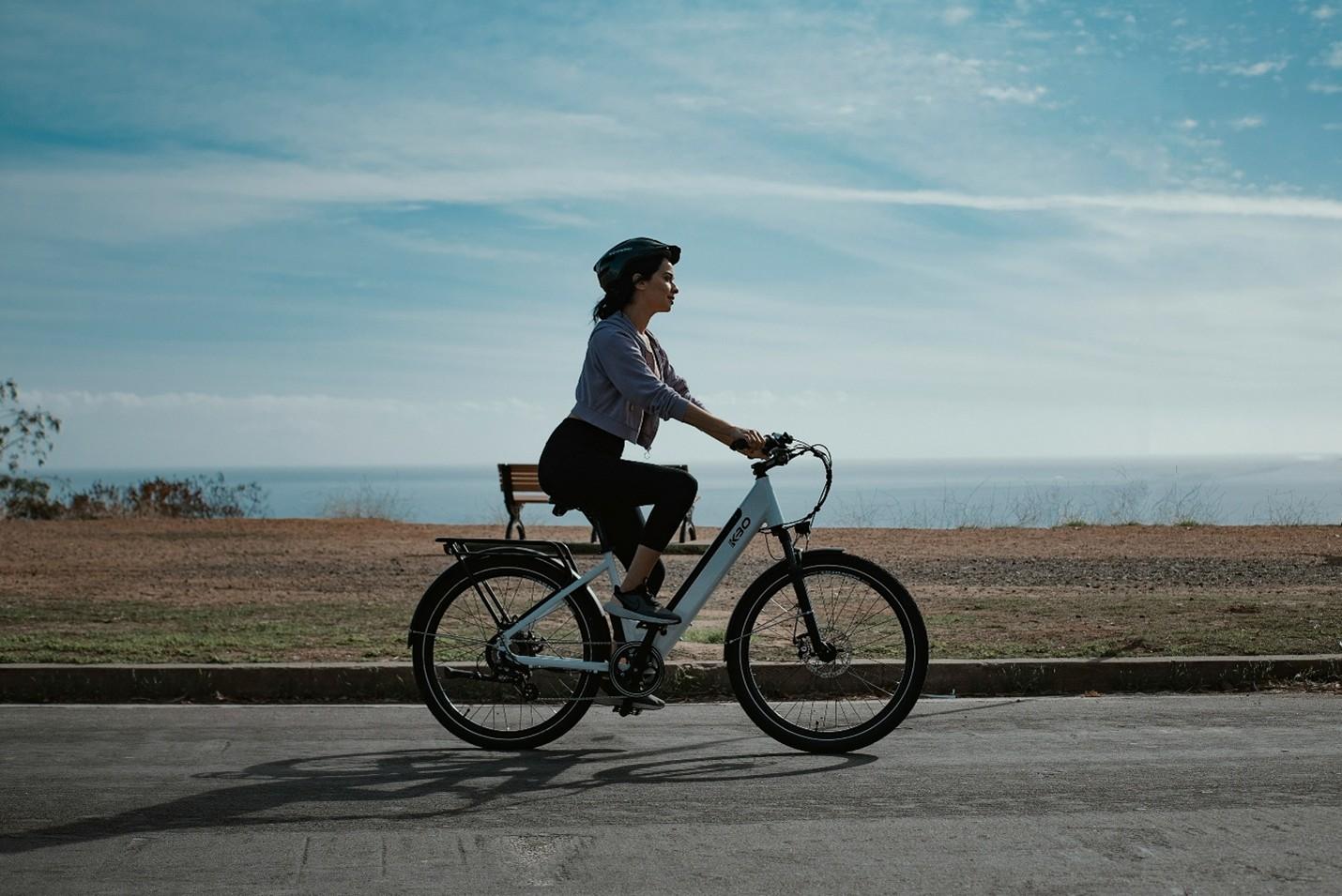
Rider on
electric bicycle. (KBO on Unsplash)
Today, there are almost as many types of e-bikes as there are types of pedal bikes; however, generally most e-bikes fit into 3 main categories (or classes) of bikes. Some resources will argue that select e-bikes may fit into a fourth class. The primary difference between classes are what triggers the electric motor and top speeds (see below table).
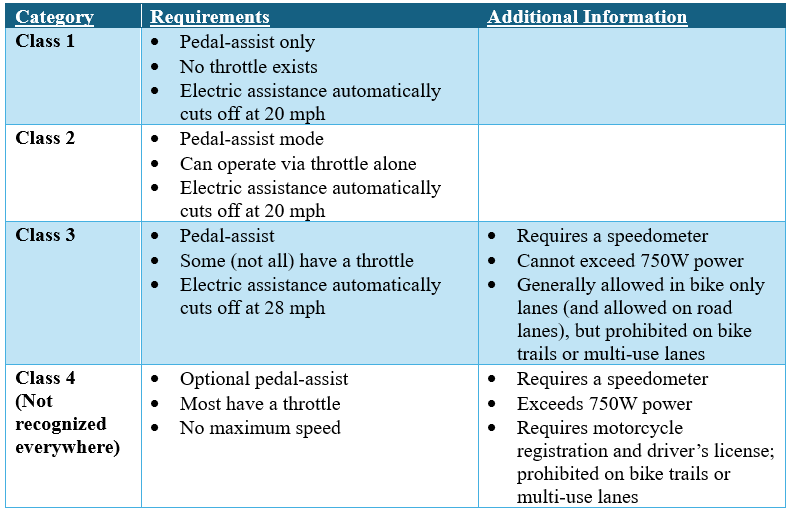
In greater than 30 states, e-bikes are recognized by this three-class system. Generally, all can be operated without a driver’s license, but additional state requirements vary. These US classes differ from classifications in other countries (including many in Europe, Australia, and parts of Asia) that have capped speeds at 15 mph. After-market modifications of an e-bike may alter its classification; for instance, a bike purchased as Class 1 might be modified to alter its speed and be operated under Class 3. Federal regulations around Class 4 e-bikes (which includes electric scooters, mopeds, and dirtbikes) are currently pending approval and therefore have limited oversight.
The primary reasons for owning an e-bike are commuting, recreation, or transporting cargo. Notably, if dedicated bicycle lanes do not exist, then restrictions may force e-bikes to ride on roads (or shoulders) in urban areas. Trail restrictions vary widely based on land managers and designations, but generally, if permitted at all, usually only Class 1 e-bikes are allowed on non-motorized recreational trails.

A trail marker restricting e-bike access. (The Colorado Sun)
Potential Health Benefits
The primary health advantage of riding an e-bike is its association with creating an easier form of exercise. E-bikes are accessible to a broader range of individuals that may have physical barriers to using conventional bikes. The ability to use e-bikes as a mode of commuting also introduces a potential for increased physical activity.
A study evaluating bicycle riders for 8 weeks, riding an average of three times per week at 30 minute ride intervals, found overall mental health benefits for e-bike riders that exceeded that of conventional bike riders. They found improvements in reaction time, executive functioning, and self-reported mental health (or positive outlook). A small study found that stroke survivors with hemiparesis were able to increase physical activity through use of e-bike riding: participants noted that pedal assistance improved their confidence and willingness to ride; however, more studies are needed to validate these findings. A small feasibility study found similar results in participants with type 2 diabetes, finding that e-bikes offered an acceptable form of exercise that overall improved physical activity. They found e-bikes approachable and reported a positive experience overall.

Mountain E-bike route in Spain. ( Mountain Bike Worldwide)
Studies have found that riding e-bikes achieves the moderate to high physical activity levels needed to see cardiovascular health benefits, and that e-bike riders are more likely than traditional riders to ride for longer and to ride more often. For instance, one study in 2022 found amongst 10,000 cyclists, that average trip length for e-bike riders was 5.8 miles compared to 2.9 miles for traditional riders. Sustaining elevated heart rates over prolonged distances has benefits at multiple levels, such as cardiovascular fitness, improving oxygenation, and stabilizing blood glucose and cholesterol levels. The same study found that many riders were using e-bikes as a supplement and still maintaining or improving their abilities on traditional bicycles. Additionally, physical therapists have noted potential benefits in recovery of injuries, by allowing users to control and carefully monitor their progression as they return to cycling.
The Wasatch Fire and Scottsdale Fire teams have implemented E-bikes for use by their EMTs, and have noted that the use of e-bikes has allowed faster response times and increased ease of carrying heavy supplies. This has allowed them to respond to events such as heat exhaustion and anaphylaxis more quickly. Previously they had to navigate difficult trails only via hiking, while personally carrying all their needed supplies. With the increased usage of outdoor recreation areas, e-bikes have allowed EMTs to more effectively respond to remote rescues.
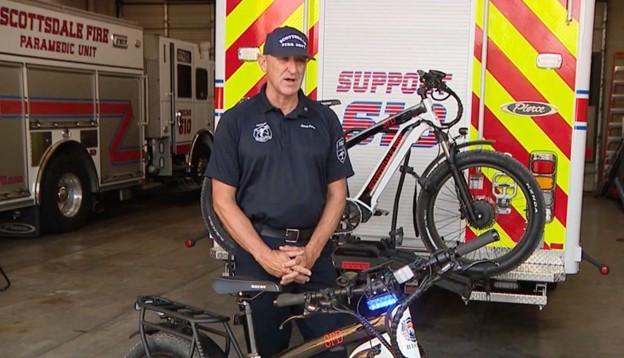
The Scottsdale Fire Department carries electric bicycles mounted on their ambulances for quick deployment. ( Electrek)
Environmental Considerations
In a small study conducted by the International Mountain Bicycling Association, soil erosion and trail degradation were evaluated across multiple trail users. General findings indicated that mountain biking impact on trails was similar to hikers, resulting in less impact than equestrians and motorized travelers. Their research found that trail design, rather than type of user, had the largest impact on sustainability of soil, water quality, and vegetation. In this study, Class 1 e-bikes had differences noted at turns and grade changes; however, soil displacement was not statistically different when compared to mountain bikers.
Safety Risks
One of the disadvantages to e-bike usage is associated with safety risks. Compared to traditional bicycles, e-bikes carry the same perils with the added risks associated with travelling farther and at faster speeds, exceeding 20 mph. The Consumer Product Safety Commission (CPSC) reported 39 deaths and 181 injuries in individuals using micromobility devices, including e-bikes from 2019-2023. In California, local data suggests that e-bike crashes have increased 18.6 fold from 2018 to 2023. A 2019 study of emergency room visits demonstrated that e-bike riders were more likely to suffer internal injuries (including internal bleeding) than conventional bicycle riders, due to high speed collisions. Similar to motorcycle collisions even in low speeds, e-bike collisions involving automobiles are high risk and more likely to be associated with fatality. Yet, Class 3 and 4 e-bikes are often encouraged to be in road lanes, lacking clear protected areas for travel in many local areas.
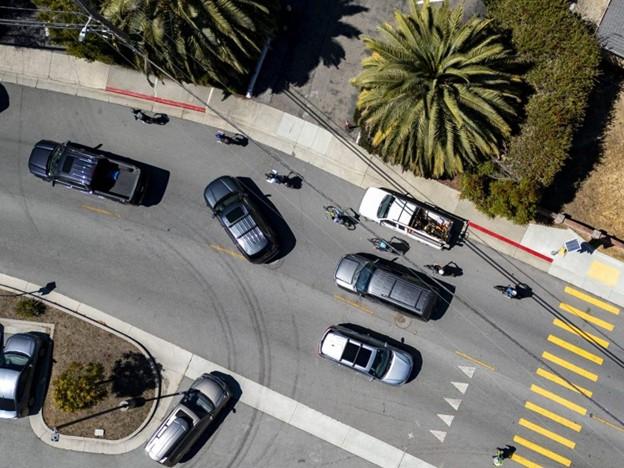
Student bikers weaving through traffic. ( Kevin Painchaud / Lookout Santa Cruz)
The use of lithium ion batteries also generates a fire injury risk. While this type of fire is rare, related injuries can be severe and are often related to improper manufacturing, storage, or charging. Currently, manufacturers are only voluntarily meeting battery safety standards, as no formal regulations exist. Therefore, it is important to research and buy only from reputable retailers. Cases have also been reported of bikers being stranded for several hours in remote areas after battery failure. For instance, one e-bike rider was left stranded for 30 hours after her battery died and had to push her bike manually for 20 miles, before she was rescued from deep in the Big Bend Ranch State Park.
Largely, it has been left to local regulations whether or not to specify a minimum age required to ride, despite evidence from a 2023 study finding that riders aged 10-13 account for 44% of injuries. Moreover, individuals aged 10-15 require an ambulance at 5x the rate of all other e-bike crash events. Currently there are limited regulations to encourage safe behavior. For instance, universal helmet requirements are lacking (even on e-bikes rentals), regulations do not limit speed limits for e-bikes in congested urban areas, and there are no restrictions on the number of passengers on an e-bike designed only to carry one individual.
In summary, the primary advantages of riding an e-bike are its associated health benefits, including increased physical activity and cardiovascular health, improvements in mental health, or more precise control while recovering from an injury. Additionally, the increased ability to carry supplies quickly may allow for quicker responses by rescue personnel, particularly in medical emergencies. However, the primary disadvantages of riding an e-bike include its safety risks, including higher consequences associated with high speed collisions and potential battery failure and injuries. Youth populations are at particular risk of dire outcomes with limited regulations in place to encourage safe practices, and reckless behavior may be further precipitated by social media. As with other areas of medicine, the knowledge around e-bikes continues to expand and change, as both the technology advances and our understanding grows. Nevertheless, e-bikes carry risks that exceed conventional bicycles, and safe operating practices should be encouraged to minimize devastating injuries or fatalities.