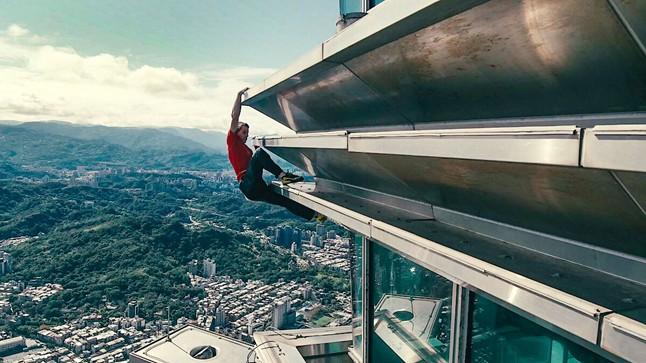
Alex Honnold on Taipei 101. Source: Netflix
By now, the climbing community, and many outside of it, have seen Alex Honnold’s livestreamed ascent of Taipei 101 on January 25th. In his wake, many people have been witnessed trying to attempt the start of the route, prompting access to the corner to be blocked off. Commentators have queried what would happen if someone were to fall, as many including myself must have wondered for Honnold’s highly publicized ascent. The only safety measure seems to have been closing streets around the building to protect potential pedestrians at the base of the building from being crushed by a falling body.
With this stunt, Honnold has effectively brought the discipline of buildering (buildings + bouldering) into the spotlight. It’s difficult to trace the history of buildering given that people have long sought to scale large structures, whether for university pranks, seeking a height from which to BASE jump, setting up an urban highline, or to build on freerunning/parkour skills. Written accounts of urban ascents date back to the late 1800s. Unlike rooftoppers, who seek to gain access to the top of a building/structure via any means (and often from inside), buildering focuses on the act of climbing the structure itself. Buildering guidebooks have popped up on university campuses, some even with their own ranking system. Companies have converted dams and silos into climbing gyms. Buildering has appeared in climbing films, with the 16th edition of the annual Reel Rock film tour including a feature of a horizontal feat of an 800m bridge.
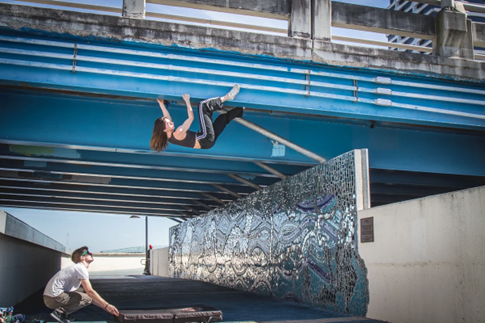
Buildering with a spotter and pad. Source: The Project Magazine
For shorter ascents, safety gear often reflects that of bouldering – crash pads and spotters. For taller ascents, safety considerations include making sure no one is in the potential no-fall zone. Climbing shoes, chalk, tape, and crack gloves are often used. Ropes, harnesses, and traditional protection may also be seen on longer ascents. Depending on the location, a security watchout may be the most important partner, as many buildings and structures have bans on climbing. Those that don’t seek permission, as Honnold did for his televised climb, and Alain Roberts did before him when he climbed Taipei 101 with a rope, instead focus on climbing faster and higher than the authorities. Even then, people have been arrested once reaching the summit.
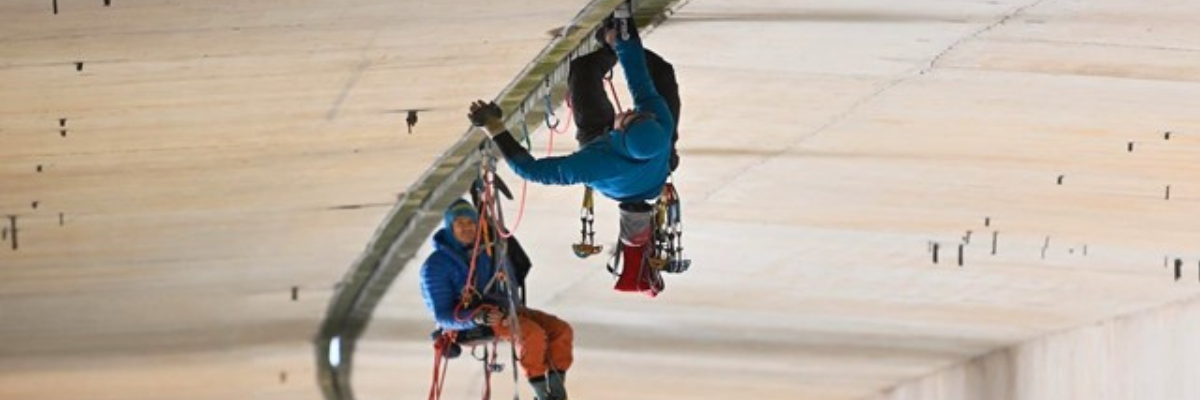
Pete Whittaker and Tom Randall, the “Wide Boyz”, pitching out The Great Rift. Source: Climbing.com
Routes that make it into guidebooks or onto Mountain Project often have a PG13 or R rating, indicating potential for serious injury or death in the event of a fall. The landscape immediately below a route may be concrete, uneven, or have manmade (fences, railings) or natural protrusions (trees) that would increase injury in the event of a fall. Dropping gear, breaking building features, or falling onto someone or something below can result in serious injury or death to climbers, onlookers, and pedestrians.
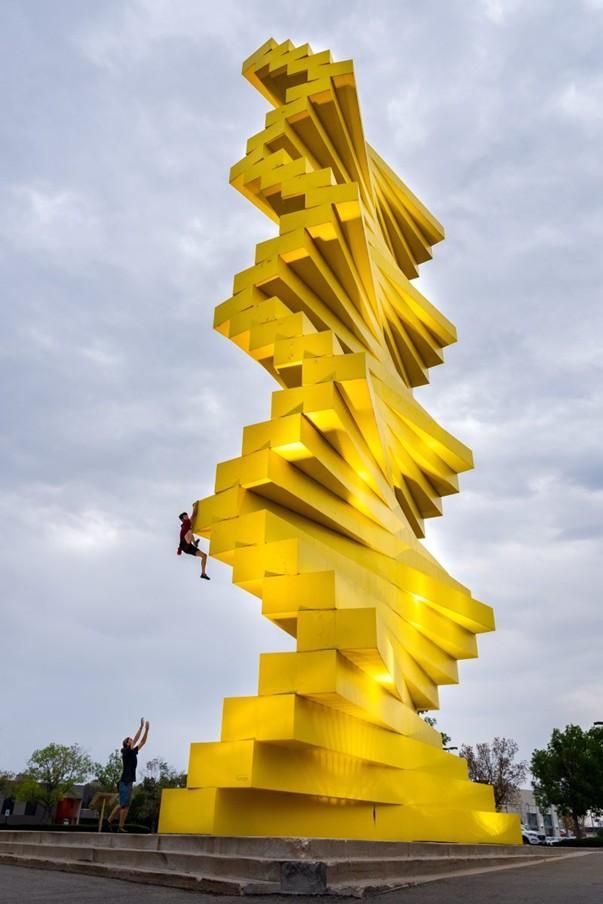
Tyler Rizzuto climbs the 85-foot Articulated Wall in Denver. Source: Will McKay, The Colorado Sun
Climbers should also consider the material of the structure climbed. As Honnold delayed his climb due to rain possibly making Taipei 101 too slick, so should builderers consider the material on which they are buildering. Sandstone, famously known for breaking after a rain, is also a common building material. As with outdoor climbing on sandstone, urban ascensionists should avoid climbing on sandstone structures after a rain. Given that lightning can strike a distance away from a rainstorm, it would be prudent to avoid climbing around times of potential thunderstorms.
Cosmetic external features may not be designed or rated to sustain the full weight of a human body or catch a fall. Glass may shatter. Exposed wire and sharp features can cut skin. Even after reaching a building’s summit, there may not be sufficient locations to build an anchor for belay or rappelling – downclimbing may be the only option.
While there is a paucity of official safety guidelines available for buildering, general climbing safety concepts still apply:
- Access: ask for permission; understand local access laws
- Fall zone: assess for people/objects you may impact on the way down
- Building materials: consider ways to increase friction; avoid brittle materials
- Weather: consider effects of precipitation/wind/temperature on the structure
- Anchors: may require creativity and redirects; may not exist
- Protection: may not fit into standard building design features
- Descent: may require downclimbing unless there is access from within the building