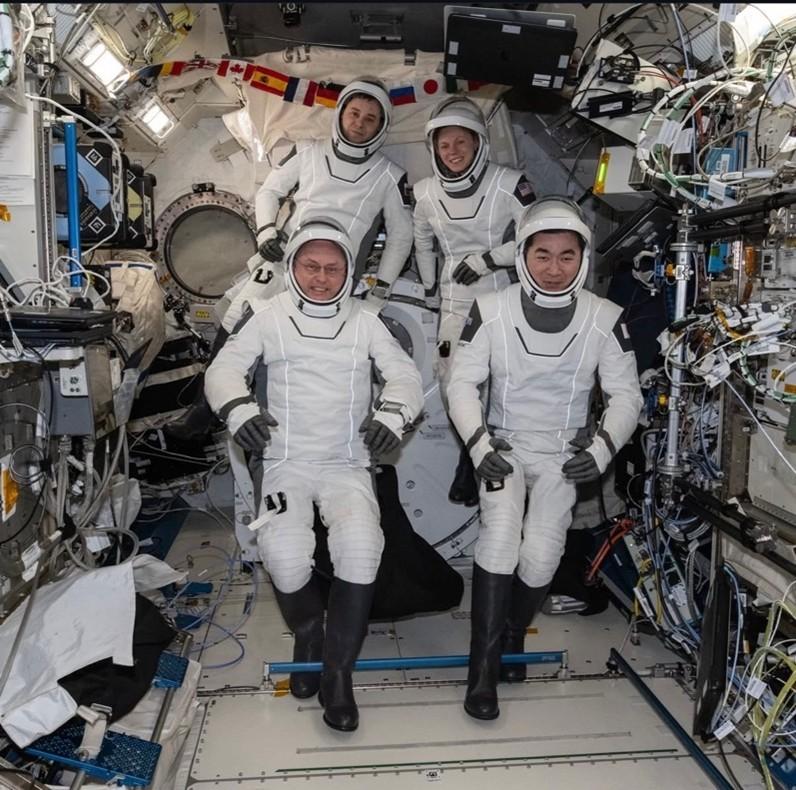
Photo from @ISS. The Instagram account of the International Space Station.
For the first time in its history, NASA executed a medical return of astronauts from orbit. This marks a watershed moment in human spaceflight, aerospace medicine, and contingency planning in low Earth orbit. The decision to return the four-person SpaceX Crew-11 mission earlier than scheduled followed a medical concern involving a crew member aboard the International Space Station (ISS). This is a scenario long planned for, but, never before enacted.
“Jan. 7, a single crew member on board the station experienced a medical situation and is now stable. After discussions with Chief Health and Medical Officer, Dr. JD Polk, and leadership across the agency, I’ve come to the decision that it’s in the best interests of our astronauts to return Crew-11 ahead of their planned departure,” said NASA Administrator Jared Isaacman.
The SpaceX Crew-11 Dragon capsule undocked from the ISS at 5:20 EST January 14, 2026, after a thorough review of the spacecraft readiness, recovery team readiness, weather conditions, and the state of the Pacific Ocean in the designated splashdown zone. The astronauts splashed down off the California coast at 3:41 AM EST in pristine conditions with 2-3 foot waves and 3 knot max winds. The return represents the first operational medical evacuation from the orbital laboratory. It is an unprecedented real-world test of NASA’s medical, operational, and ethical frameworks for astronaut health.
This Decision was Rooted in Preparedness
On Jan. 8, NASA announced its decision to accelerate the return of Crew-11 after flight surgeons and mission managers identified a medical concern in one of the astronauts aboard the ISS. NASA emphasized that the crew member is stable.
“Because the astronaut is absolutely stable, this is not an emergent evacuation,” NASA Chief Health and Medical Officer Dr. James “JD” Polk noted. Dr. Polk added that the return allows a more comprehensive medical evaluation than is possible aboard the space station. “Always, we err on the side of the astronaut’s health and welfare.”
While specifics remain confidential, the decision underscores the maturity of NASA’s medical decision-making process in spaceflight. Astronaut crews undergo extensive medical screening before launch, and on-orbit medical monitoring is continuous. Still, space presents a uniquely constrained environment where even manageable medical conditions may necessitate a return to Earth for definitive evaluation or treatment. We have learned that abnormalities noted on a Butterfly Point of Care Ultrasound helped make the determination that an expedited return was needed.
In the 5:40 AM EST NASA splashdown debrief on January 15, 2026 with NASA Administrator Jared Isaacman and NASA Deputy Associate Administrator for Space Operations Joel Montalbano, Montalbano said that the crew would spend the night in a hospital in San Diego prior to returning to Houston. He expected all four crew members to be released at the same time.
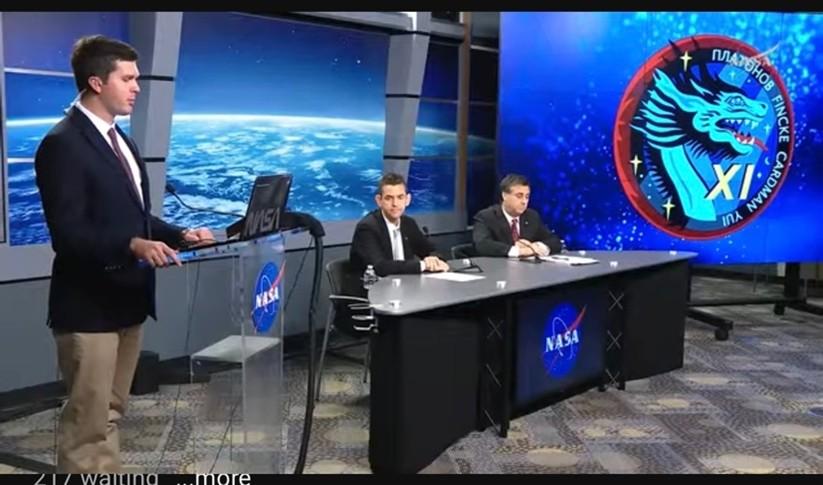
Screenshot from @NASA youtube.com
Crew-11: An International Mission Returns Early
The Crew-11 mission included NASA astronauts Zena Cardman and Mike Fincke, JAXA astronaut Kimiya Yui, and Roscosmos cosmonaut Oleg Platonov, highlighting the international nature of ISS operations. The ISS remains one of the last bastions of global collaboration. The multinational crew was originally scheduled to return to Earth in February 2026 after their Crew-12 replacement arrived.
Despite the early return, NASA officials have emphasized that the mission objectives achieved aboard the station are significant and that the decision reflects caution, not crisis. Medical contingencies have been built into ISS operations since its inception, with crew vehicles designed to function as lifeboats if needed. This event transforms that theoretical capability into operational reality. (Ref: January 15, 2026 5:45 AM EST Splashdown Debriefing @NASA)
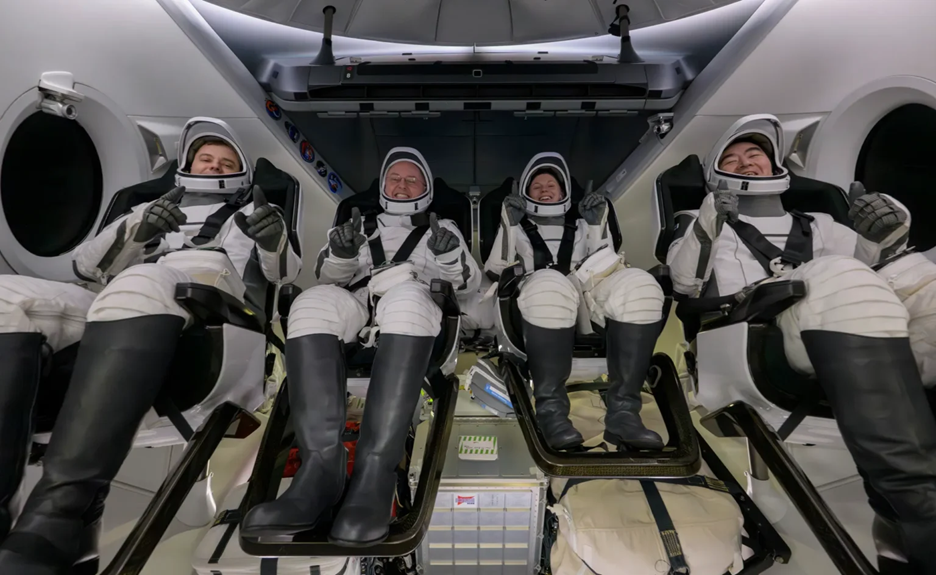
Crew-11 in Crew Dragon Endeavour after the hatch was opened once they were aboard SpaceX’s recovery ship SHANNON, January 15, 2026. L-R: Oleg Platonov (Roscosmos), Mike Fincke (NASA), Zena Cardman (NASA), Kimiya Yui (JAXA). Photo credit: NASA/Bill Ingalls.
Why This Matters: Space Medicine in Practice
Although astronauts routinely manage minor medical issues in orbit, this marks the first time NASA has executed a mission return primarily for medical reasons. It highlights a critical reality of long-duration spaceflight: while astronauts are among the healthiest humans on Earth, illness or injury remains possible. Sometimes Earth-based care is the safest option. Physician astronaut Michael Barratt with Crew-8 returned to Earth October 28, 2024. The remaining crew had medical training but there were no physicians on board with Crew-11. Isaacman and Montalbano communicated in the splashdown debriefing that a physician on board would not have changed the recommendation for Crew-11 to return to Earth early.
For aerospace medicine specialists, the event represents a landmark validation of decades of planning. Medical evacuation from space requires coordination across multiple domains: spacecraft systems, orbital mechanics, recovery forces, medical teams, and ethical decision-making under uncertainty.
Dr. Michael Harrison, Mayo Clinic Florida Emergency, Aerospace and Critical Care Medicine, says “Human spaceflight is inherently risky due to the mission profiles and increasing operational tempo. I think it is a testament to the efforts of NASA's medical team that 25 years of continuous operations on the International Space Station, the most austere outpost in human exploration, has not resulted in a medical evacuation sooner. This track record is impressive given significant medical events such as the well-documented thromboembolism case in 2019 and a wide range of medical conditions within the astronaut corps. The safe execution of medical stabilization and evacuation of the entire crew in this instance lends further support to the experience, skill, and well-defined processes that NASA employs on a daily basis in optimizing crew health before and during long-duration missions.”
Recovery Operations and What Comes Next
After splashdown, recovery teams secured the Dragon spacecraft and extracted the crew for immediate medical evaluation. Standard post-flight medical protocols include assessment for orthostatic intolerance, vestibular dysfunction, dehydration, and musculoskeletal effects of microgravity.
A Quiet First, With Lasting Impact
Though NASA has downplayed drama and emphasized stability, the significance of this event is profound. The first medical evacuation from space did not unfold as an emergency broadcast or crisis. It was a deliberate, measured response grounded in preparation and restraint.
In many ways, that is the most reassuring outcome of all. It appeared to be executed flawlessly. Even the weather and the ocean cooperated.
Canadian commercial physician astronaut Dr. Shawna Pandya noted "Between commercial spaceflight and exploration-class missions, we are entering a new era of human spaceflight, where we will have to deal with pathologies previously not seen in astronauts. We are going to see crews moving to Earth-independent medical operations, building on the vast compendium of knowledge and risk accumulated over decades of human spaceflight by NASA and its partners. This history of careful risk identification and management was instrumental in keeping the affected crew member safe in this case and will further inform astronaut health risk identification and management as human spaceflight moves into its next eras."

Photo of Dr. Pandya credit Cooper and O’Hara Photography
As human spaceflight enters an era of longer missions, commercial partnerships, and expanded exploration, Crew-11’s return will stand as a reference point for how medicine, mission management, and human safety intersect beyond Earth.

Photo of a Kennedy Space Center Rocket Launch from the US Virgin Islands. Courtesy of Ryan Jones
Space Station Evacuation Update
April 6, 2026
NASA has announced that Col. Mike Fincke, pilot of the SpaceX Crew 11 ISS mission, was the astronaut whose medical issue prompted NASA’s first in-flight medical evacuation. Fincke has since reported a complete recovery. The event occurred abruptly while aboard the International Space Station, lasted approximately 20 minutes, and was characterized by an inability to speak. The underlying cause of this episode remains unknown.
Extensive evaluation, initially at Scripps Memorial Hospital in San Diego, has ruled out myocardial infarction and stroke, but no definitive diagnosis has been established. It is thought to be due to the physiologic effects of prolonged microgravity exposure. An onboard handheld Butterfly ultrasound was utilized during the incident to guide medical decision making.
Further testing has been conducted post-return, with ongoing review of astronaut corp medical data for similar occurrences. Despite the alarming nature of the episode and its operational impact, including a canceled spacewalk and early mission termination, Fincke has returned to baseline health and remains hopeful for future spaceflight.