In 1986, I was camping with a group of scouts close to Mt. Rainier in Washington state. Deciding to take a shortcut back to the trailhead, seven of us got lost. When the falling snow made travel difficult for the smaller boys, we set up a small shelter under a pine tree and two of us followed a creek bed hoping we could find the trail or a road before nightfall. Less than half a mile away we found the trailhead and quickly returned and retrieved the other boys.
Skip forward to 2025. I’m hiking to Timberline Lake in the Beartooth Mountains. I’ve never been before and I’m hiking with only my dog as a companion. Despite my past experiences and the chance of snow, I’m not concerned. I’m following an interactive mapping that is also updating my location with my wife who is at home many miles away. That night I spent 30 minutes on a video call with her after I had caught up on some patient messages. The biggest difference in my experiences: satellite technology.
Since the first voice satellite relay in 1958, the early development of communication satellites for civilian use was problematic. Due to the smaller commercial markets for these products and the huge initial investment cost, the devices were often too costly or lacked functionality to be used by medical providers. That has shifted over the last few years as dozens of devices have entered the market and service providers have lowered costs.
Current Service Providers
Inmarsat started as a non-profit, inter-governmental organization established by the International Maritime Organization to provide emergency maritime communications before it was privatized in 1998. Their network consists of thirty operational satellites in various orbits around the earth providing communication and data services globally.
Globalstar was founded in 1991 and began operations in 1999 with 48 satellites. The company upgraded the system in 2010 with an additional 25 satellites in orbit and 24 land-based gateways. Their network covers most of North and South America as well as Europe, Japan, and Korea.
Iridium launched in 1998 with big goals and major tech backers. After bankruptcy and restructuring, general service was available in 2001. In 2019, Iridium placed 75 upgraded communication satellites in orbit extending coverage to the entire world.
Starting development in 2016 and launching its first satellites in 2018, the Starlink system is the largest satellite company to date and consists of over 7,000 satellites with plans to expand to 12,000+. The satellites are in a low earth orbit to reduce latency and facilitate the demands of video communications and streaming.
Commercially Available Devices
Satellite Extenders for Smartphones
Examples: Zoleo Satellite Communicator, Garmin inReach Messenger plus, Motorola Deft Satellite Link
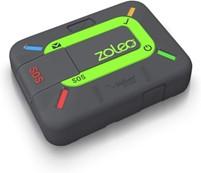
Zoleo Global Satellite communicator
These devices allow a smartphone to connect to a satellite network either though Bluetooth or tethered cord allowing two-way texting along with SOS location services and GPS mapping. Some even support photo and voice message transmission. They do require a service contract as well as a smartphone for texting.
Handheld Two-way GPS Communicators
Examples: Garmin inReach Mini 2, Spot X
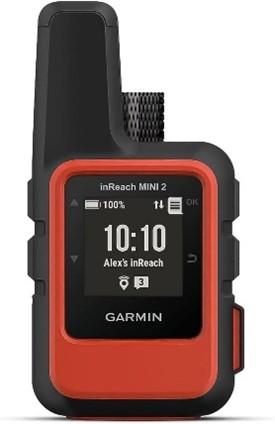
Garmin inReach Mini 2
These models allow two-way text messaging without a separate phone. Satellite tracking, SOS features, and phone tethering are other features available. These units usually have better battery life than a smart phone and are often waterproof and impact resistant. They require a service provider. For a more detailed look at some of the dedicated GPS equipment see GPS Technology.
Satellite Phones
Examples: Iridium 9555, Iridium Extreme 9575, IsatPhone 2, Thuraya products
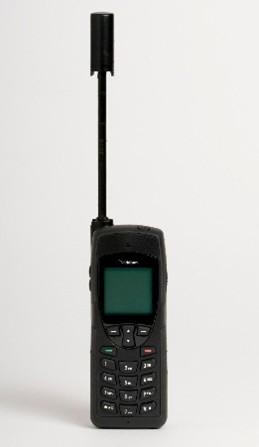
Iridium 9555
Satellite phones have provided direct voice-to-voice communication for over 20 years. Iridium 9555 provides global coverage even in mountainous environments. Battery life is reasonable at 30 hours on standby and 4 hours of continuous speaking. The Iridium Extreme 9575 adds the features of GPS tracking and one-button SOS programing.
The IsatPhone 2 from Inmarsat is another option and is the base product for the Globalstar network. It performs well in service areas and has a longer battery life than the Iridium products with 160 hours on standby mode and 8 hours of continuous speaking.
Thuraya phones are not available in North and South America but have good coverage in Europe, Africa, and Asia. Thuraya also produces the only touchscreen satellite phone.
iPhones
In 2024, Globalstar partnered with Apple to provide texting and emergency messaging on the iPhone 14 and subsequent iterations. This two-way texting and SOS feature is independent of the service provider and is available in limited countries. For a more in-depth look at the Apple service, check out Apple offers Emergency SOS Satellite function.
T-Mobil, Verizon, and AT&T networks
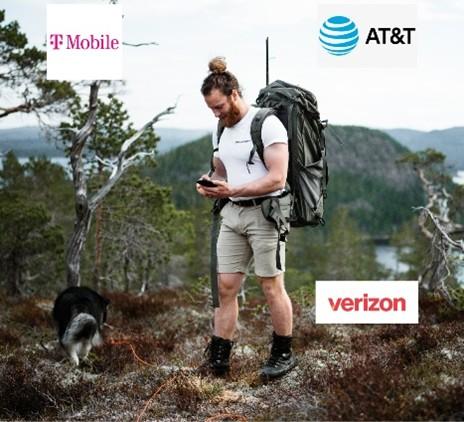
Within the last year, all three major U.S. cell phone carriers have announced some form of satellite communication with their cell phone services. T-Mobile partnered with the Starlink system and now provides an add-on service including voice, texting, and data whenever the smartphone does not have cell service. Verizon entered the market with satellite-based texting with their own satellite system. The texting is provided at no extra cost on any of the MyPlan services. Plans are in the works to expand the service to include e-mail, photos, and navigation assistance. AT&T completed their first satellite voice and texting calls in July of 2025 via AST SpaceMobile satellites. The company plans on having its own network of communication satellites to provide services. They have also partnered with FirstNet to provide push-to-talk services covering the nation where cell service is available.
Starlink Mobile Mini
Device and service comparisons*
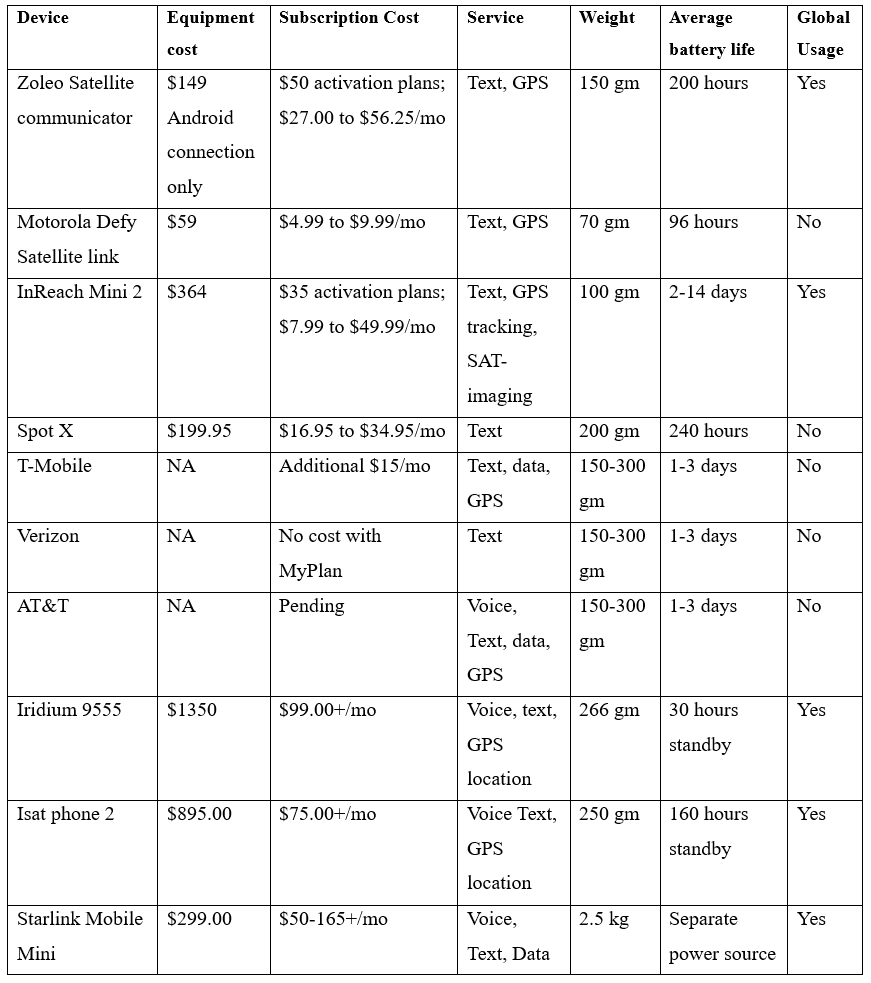
*Costs and supplies were collected in November 2025 and are demonstrative and are not intended to be definitive.
Ultimately, the device you choose will be based on your needs and your budget. Are you an occasional fair-weather hiker that wants to access help in an emergency? Cell phone emergency texting may be all you need. A remote backpacker that needs tracking or emergency location? The inReach mini 2 or Spot X may be the best choice. Coordinating a large remote group that needs communication as well as emergency services? A dedicated sat phone (or several) might be the best choice. Setting up a base camp that needs internet connection as well as cell service for multiple devices? A Starlink mobile device could provide the breadth of services you need. Whatever your needs, satellite communication technology can now provide a critical resource for remote medical providers and should only improve as companies continue to add satellites to their fleets.