Introduction
It is late afternoon on a small recreational
dive boat, ten miles offshore. The sun is low, the water is calm, and the deck
smells faintly of diesel and salt. A diver has just completed a 95-foot dive
exploring a wreck, with a bottom time of 25 minutes and a slow ascent to the
surface. Minutes after surfacing, she begins to feel light-headed and complains
of an aching pain in her right shoulder.
The divemaster quickly places her on a
demand-valve mask delivering 100% oxygen as the captain turns the bow toward
shore for the 90-minute run back to the marina. Halfway through the trip, the
diver’s pain is still present, but she reports feeling “clearer.” When EMS
meets the boat at the dock, they note her oxygen saturation is 100% on pulse
oximetry and remove the mask.
This decision, though it may appear
reasonable, is a critical error. Pulse oximetry does not reflect decompression status and discontinuing oxygen can worsen the diver’s outcome. Decompression illness (DCI) is an umbrella term that includes
decompression sickness (DCS) and arterial gas embolism (AGE). In DCS, dissolved inert gas, mainly nitrogen, comes out of solution as pressure decreases, forming bubbles within tissues and the bloodstream. In AGE, expanding
gas in the lungs causes alveolar rupture, allowing bubbles to enter the
arterial circulation and travel to the brain or other organs, or in some cases
through a cardiac or pulmonary shunt such as a patent foramen ovale, bypassing
the pulmonary filter.
Recompression therapy is the definitive treatment for DCI, but delays are common. While waiting for chamber access, oxygen and rehydration are the most effective interventions to reduce bubble-related injury and inflammation.
Despite this, EMS protocols often treat oxygen saturation as the endpoint. Some protocols also neglect hydration, and while diving injuries are occasionally referenced in coastal systems, such guidance is rarely included in standard EMS curricula or protocols elsewhere. The common belief remains that oxygen administration is indicated only for hypoxia. The National Model EMS Clinical Guidelines, Version 3.0 is one of the few national documents that specifically recognises diving-related emergencies. It advises EMS providers to deliver 100% oxygen, keep the diver supine when tolerated, begin isotonic fluid replacement, minimize exertion, and arrange prompt transport to an emergency department under medical direction.
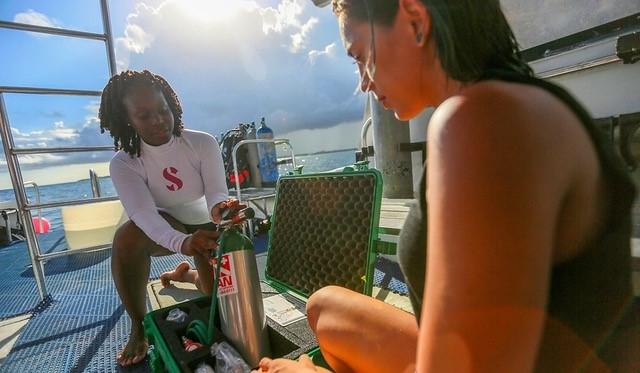
An injured diver receives 100% oxygen, courtesy of Divers Alert Network (DAN)
Why 100% Oxygen?
In DCI, the goal of oxygen therapy is not to treat hypoxemia, but to remove excess nitrogen through diffusion gradients in the lungs. Breathing compressed air during dives leads to nitrogen absorption; when decompression is inadequate, that nitrogen forms bubbles. The most effective way to reduce bubble load is to create a strong pressure gradient in the lungs by delivering the highest possible fraction of inspired oxygen. This accelerates nitrogen diffusion out of the body, as demonstrated in controlled pre-hospital and hyperbaric-care studies.
Guidelines from the Divers Alert Network (DAN) and the Undersea and Hyperbaric Medical Society (UHMS) recommend administering high-concentration oxygen immediately upon suspicion of DCI. Early oxygen reduces symptom severity and may prevent the need for recompression. In one study, over 50% of divers’ symptoms improved after first aid with oxygen therapy alone and some avoided recompression entirely. However, stopping oxygen too early can lead to recurrence of symptoms. Oxygen delivery should continue until the diver reaches definitive care or a diving-medicine specialist advises otherwise.
Pulse Oximetry Does Not Reflect DCI Severity
A pulse oximeter only reflects hemoglobin saturation with oxygen. It does not measure nitrogen load, inflammation, or tissue perfusion. A reading of 100% does not confirm recovery and should not be used to discontinue oxygen therapy. The DAN Emergency Oxygen course reinforces that field oxygen is guided by bubble kinetics, not oxygen-saturation values.
Why Hydration Matters
Dehydration is a known risk factor for decompression sickness. Divers often emerge from the water dehydrated due to immersion, cold exposure, or exertion. Hydrating a diver with suspected decompression illness does more than replace lost fluids; it improves tissue perfusion and supports nitrogen elimination.
Rehydration restores plasma volume and improves circulation, helping nitrogen return to the bloodstream and exit through the lungs. Encouraging diuresis supports this process. While the urinary system removes only a small amount of nitrogen compared to the lungs, even small contributions enhance overall off-gassing.
Animal studies demonstrate that pre-hydration markedly reduces the incidence and severity of decompression sickness. Hydration also reduces blood viscosity, supports circulation, and mitigates bubble-related inflammation.
Together, oxygen and fluid resuscitation form a synergistic strategy: oxygen accelerates nitrogen washout, while hydration optimizes the body’s capacity to circulate and clear inert gases.
EMS Protocols Must Reflect Diving Physiology
Most EMS protocols are written for trauma, cardiac, or respiratory emergencies and do not account for diving physiology. Without specific guidelines, providers may stop oxygen based on pulse oximetry or omit rehydration entirely.
Protocols should incorporate evidence-based dive-medicine practices and outline steps within the EMS scope of practice. Field training should reinforce that DCI management is guided by gas kinetics and perfusion, not oxygen-saturation numbers.
Recommendations for EMS and Field Providers
When treating a diver with suspected decompression illness:
- Begin 100% oxygen immediately. Use a demand valve if available; a well-sealed non-rebreather mask is acceptable.
- Do not use pulse oximetry to decide when to stop oxygen. Base decisions on presentation, dive history, and assessment.
- Position the diver supine to optimize cerebral and spinal-cord perfusion and reduce the risk of worsening neurological injury. Use the recovery position if vomiting.
- Encourage oral hydration if tolerated. Administer isotonic IV fluids if trained; do not delay transport to start IV access.
- Avoid altitude exposure during transport.
- Contact the DAN Emergency Hotline (+1 919-684-9111) for further recommendations.
Protocols are just as important as individual training. While educating medics one by one is valuable, system-wide protocols that reflect current best practices have a broader and more lasting impact. Even inland EMS systems must be prepared for dive-related emergencies. These injuries may seem rare, but the response should never be complicated: give oxygen, support hydration, and act without delay.