The expectation to prevent death, or bring someone back to life, is no small task for a 16-year-old making less per hour than someone at a coffee shop. Yet this is the reality for thousands of young people who step into the role of lifeguard each summer. Despite the enormity of the job, the public often reduces it to a superficial symbol: red swimsuit, a tan, a tower. This illusion obscures the truth that lifeguards are professionals trained to confront one of the most misunderstood public health issues in the world: drowning. A silent, swift, and preventable cause of death.
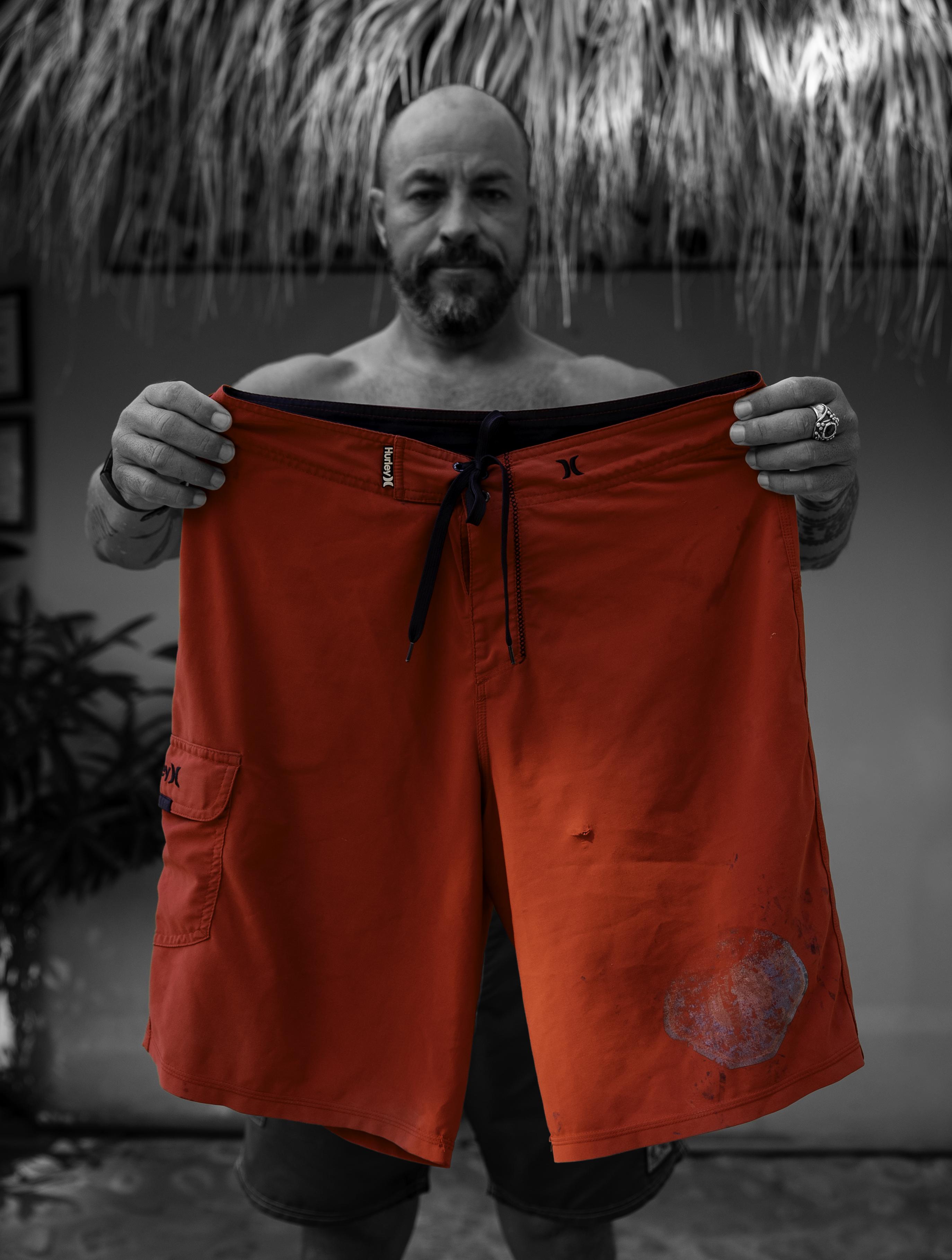
Ben Carlson’s old lifeguard shorts given to professional surfer Coco Nogales. Image: Drasko Bogdanovic
If one does not understand drowning, one cannot fully comprehend the job of a lifeguard. Even after years of service, many guards themselves don’t recognize the cumulative mental toll or global relevance of their daily work. In a world where our lives are increasingly automated and optimized, lifeguards remain one of the few roles where success is measured by what doesn't happen. Drowning has no warning such as smoke, or fire. When lifeguards do their jobs right, most swimmers and beachgoers leave unaware of the near-misses that played out in front of them. Everyone goes home from a wonderful day on the water.
And yet, beneath the calm illusion of the aquatic environment, a lifeguard’s trained eyes constantly scan for life-and-death moments that occur in an instant and with zero warning. Ask any veteran guard and they'll tell you: a “quiet day” with no rescues leaves you mentally and physically drained. On the rare occasion when we do place hands on a pulseless, drowned person, and deliver life-saving breaths, returning someone to the world, it becomes a moment you never forget. You don’t walk away from that unchanged.
It is rare for anyone to follow up on the aftermath of a rescue for the responder, or the patient. But the weight of those experiences starts long before we become aware as professionals.

A lifeguard’s reflection seen in the window watching the water from “Tower Zero” at Huntington Beach, CA. Image: Drasko Bogdanovic
At 10 years old, while on vacation with my parents at a hotel pool in Las Vegas I saw a child, maybe three years old, flip upside down after jumping in and getting stuck in an inner tube. Adults stood by, no one watching, no one acting. I waited painstakingly until I couldn't watch his legs flail anymore as he struggled to flip back and relieve himself with a breath. Disbelief turned into recognizing I had to act. I waded towards him and turned him upright. His wide, gasping eyes locked on mine just before he let out a relieving cry. The parents, confused why I was holding their child, came and grabbed him out of my hands, their attention having been gone for less than a minute. When I told my parents, they simply shrugged off the idea of what I had described, unbothered, unaware. I remember leaving the pool and going to the hotel room to sit by myself, replaying the event in my mind and questioning what had happened, and what I was feeling.
As a 16 year old lifeguard I thought I was invincible. Fast forward several years of EMS to now working as a flight paramedic, that moment has come full circle. As I retrospectively sift through past experiences of working in the tower, on an ambulance, rescues, and now a helicopter… I realize how that moment stuck with me, representing a stunning disregard from everyone around me. How could something so vivid, so clear, be invisible to others? There’s something isolating about water rescues for both the rescuer and the rescued.

A young CA State Parks Lifeguard poses for a portrait at Oceano Dunes State Beach. Image: Drasko Bogdanovic
Studies show that drowning survivors often undergo major life changes: rethinking careers, proposing to loved ones, or vowing never to enter the ocean again, all in the wake of mere seconds underwater. For the rescuers, lifeguards are often not recognized as vital first responders. Many don’t understand that lifeguards often need different support and understanding than traditional first responders. Even the professional clinicians sometimes take a misguided approach of stereotypes and need to be “culturally competent” to the first responder role. Guidance cannot be provided if the true understanding of the job is not empathized.
How do we accomplish this amongst a Russian nesting doll of illusion obscuring the profession and what it truly requires of this new young generation?
Every year a teenage lifeguard performs CPR during their first week on the job. The list of traumatic stories in lifeguarding is long. Some are shared openly; many are not. I've seen promising guards leave the job after one horrifying incident, unable to cope without tools or support. Fortunately, there is growing awareness of the mental health issues faced by lifeguards and ongoing research to better understand the scope of the problem.
I didn’t truly understand the weight of this job until I saw several of my own instructors break down in tears during a classroom lecture at lifeguard training academy. They were speaking about Ben Carlson, a Newport Beach ocean lifeguard who drowned in 2014 while rescuing a victim from a rip current in large surf. Ben’s death shook the lifeguard community to its core.
There were no alarms, no flames, no sirens. Just the soundless absence of a man who gave everything for a stranger. Ben’s final moments were captured on video, showing the final moment of him diving off the Sea Watch rescue boat… and never resurfacing. That image became a wake-up call to the world: Lifeguards can drown too. Wearing red trunks is not a shield. Wearing red trunks can also be fatal.
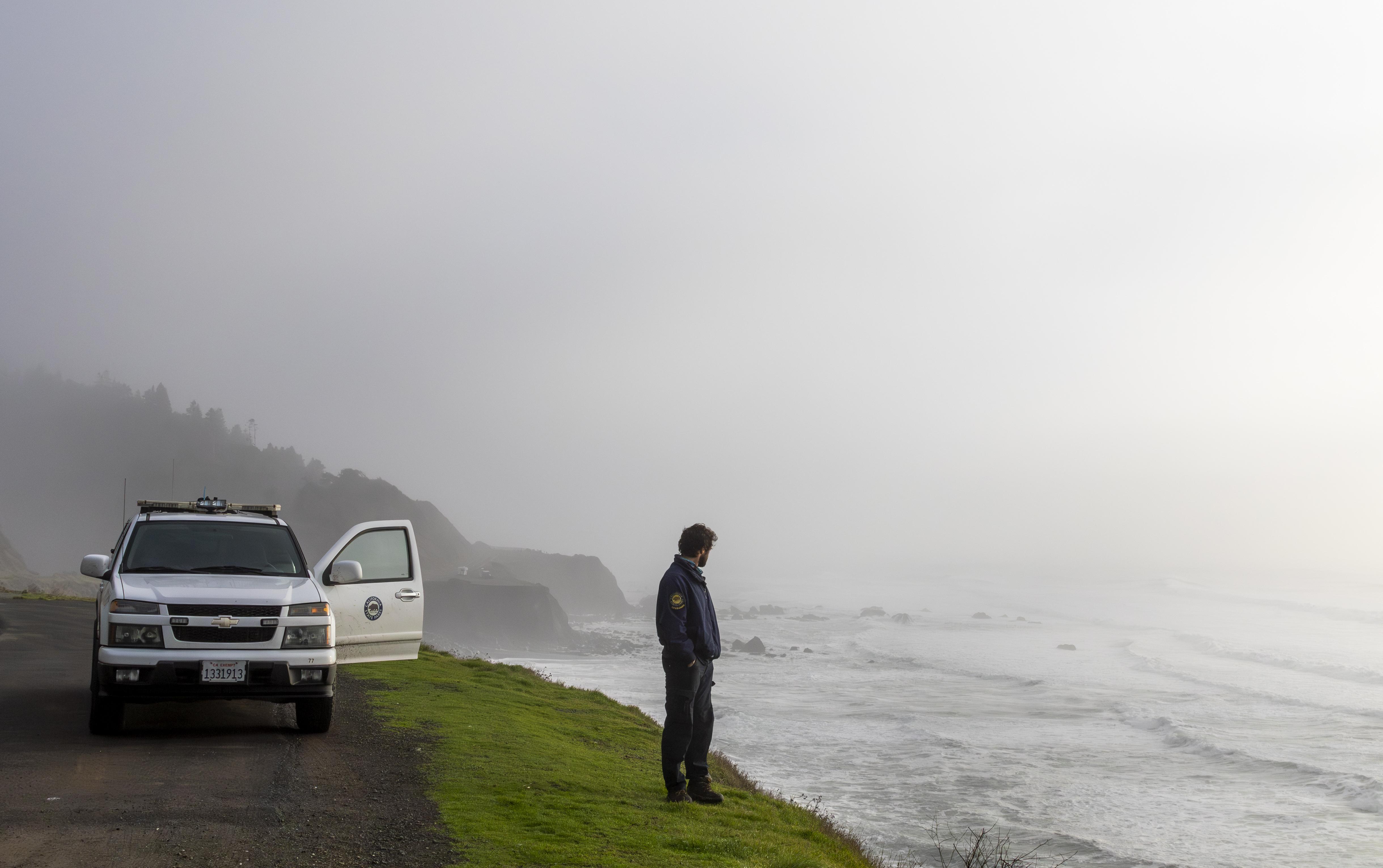
A CA State Parks Lifeguard watches over large surf as he traverses 80 miles of coastline as the sole rescuer in Mendocino, CA. Image: Drasko Bogdanovic
Fortunately, there are those that turn tragedy into action. In the wake of Ben’s death, his family and community established the Ben Carlson Memorial & Scholarship Foundation, turning grief into advocacy. Their work in education, prevention, and international outreach gave lifeguards everywhere a renewed sense of purpose and visibility. The lifeguard community began to break through the multi faceted layers of illusion and misperception harbored by lack of awareness. They sought to break down the idea of lifeguards as slackers and instead recognize the physical and mental challenges they face as first responders.
Ben Carlson spots someone in a rip current before making a rescue in Newport Beach, CA. Image Courtesy of Ben Carlson Foundation
As I progressed in my lifeguarding career I continued to learn about the illusion and unawareness of the public. The constant stereotypes and superficial notions of what we did. The dichotomy of someone asking you about “have you ever had to rescue anyone” after just pulling a lifeless body out of the surf earlier that day. Something needed to change, to be explained, to be reimagined.
I began documenting lifeguarding through photography. What started as a creative outlet eventually evolved into something more deliberate: The Lifeguard Project. As I collaborated with the Ben Carlson Foundation, I realized we shared the same vision. The world didn’t need another heroic narrative, another sensationalized news story, it needed better systems. More research. Stronger communication. And above all, support for the people doing the work.
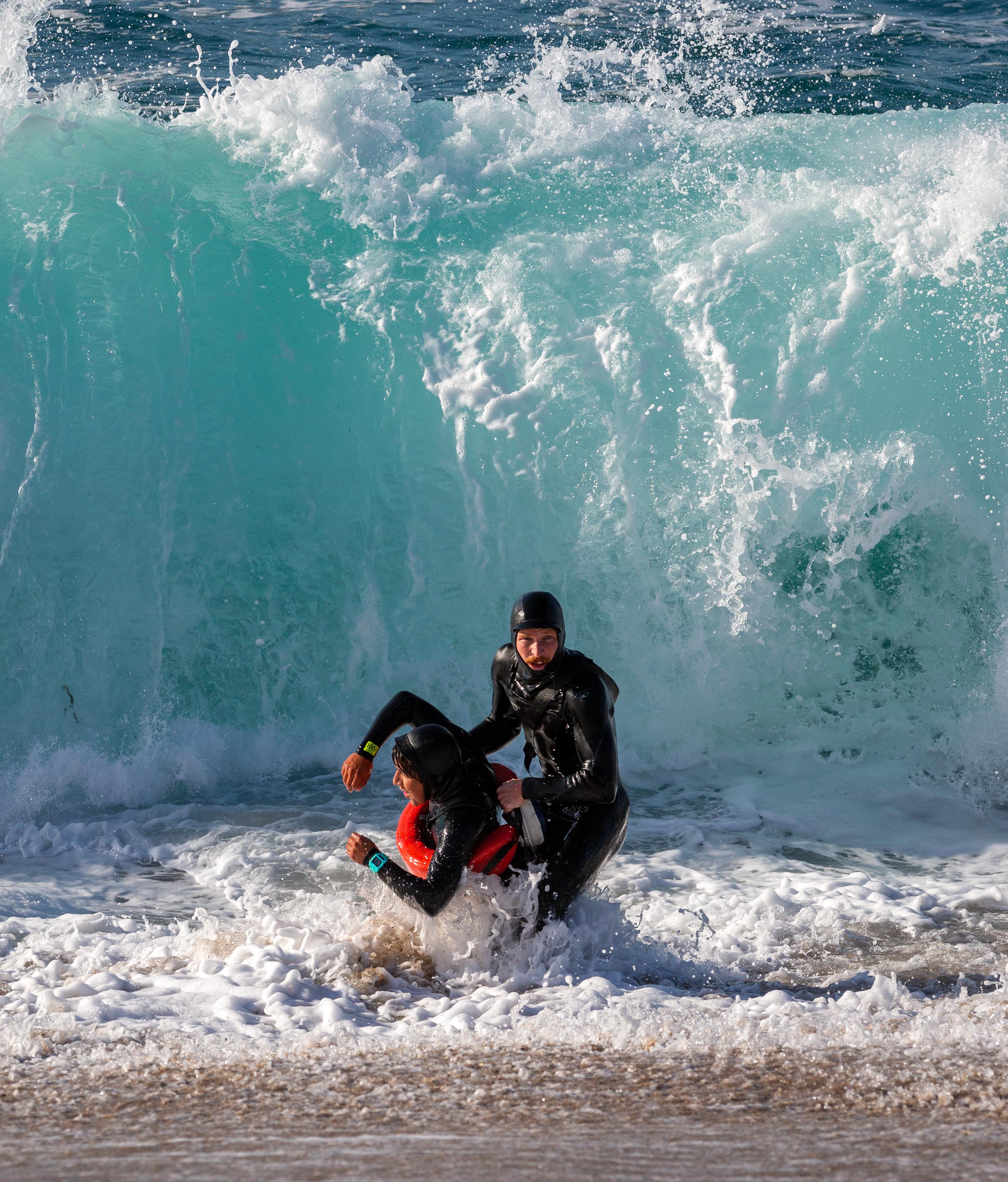
Lifeguards train in large shorebreak at Monastery Beach in Monterey, CA. Image: Drasko Bogdanovic
Drowning is not a simple problem. Prevention requires a comprehensive, multi-sectorial approach from community education and infrastructure to trained responders and coordinated policy. But at the center of it all are the guards themselves. Young people. Seasoned professionals. Men and women who hold the line in the least forgiving aquatic environments: oceans, lakes, rivers, pools. They have a world of potential ahead of them.
Through The Lifeguard Project, I’ve worked to amplify lifeguard voices through photography, interviews, public speaking, and cross-agency collaboration. By elevating their stories and advocating for their needs, we’re slowly dismantling the outdated image of the lifeguard and replacing it with one rooted in respect, professionalism, and education.
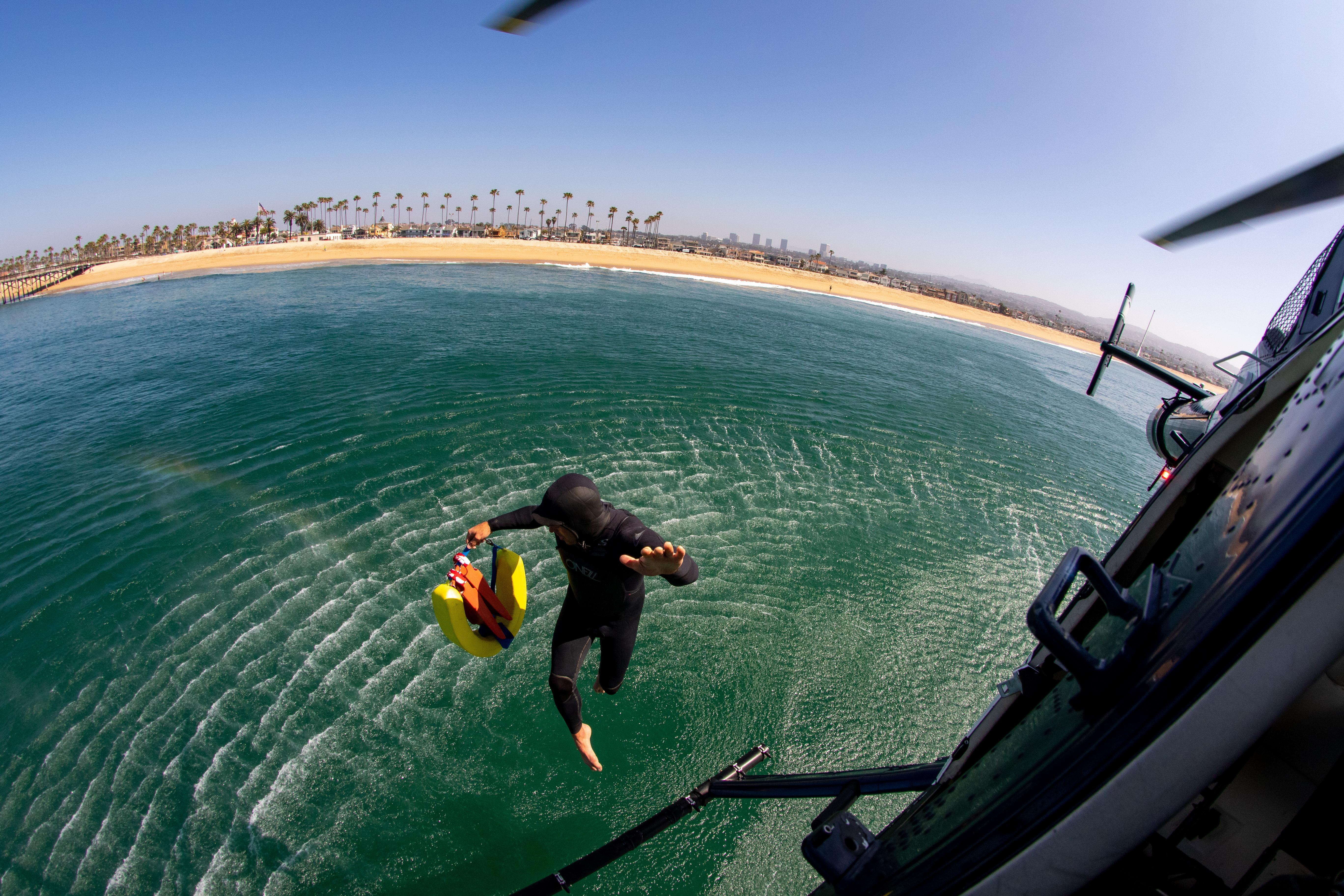
A Newport Beach Lifeguard jumps from a HB-1 Police Helicopter during a joint rescue training in Newport Beach, CA. Image: Drasko Bogdanovic
There’s still much work to be done. But like the Ben Carlson Foundation, our goal is clear: transform stories into action, and awareness into systems. We must work to our strengths across numerous sectors to recognize lifeguards for the vital first responder service that they provide and not relegate them to the tanned slackers of cinema. We must provide lifeguards with the same physical and mental health protections that we afford other first responders. The lifeguard revolution is on the tipping point. As people begin to tune in, the value will soon be revealed.