The WMS was excited to head to Lake Genera, Wisconsin to host its 2025 Summer Conference. This year’s conference included 200 in-person and 130 virtual attendees from 14 different countries. Below we hear from the Student and Resident Ambassadors on their experiences at a WMS conference!
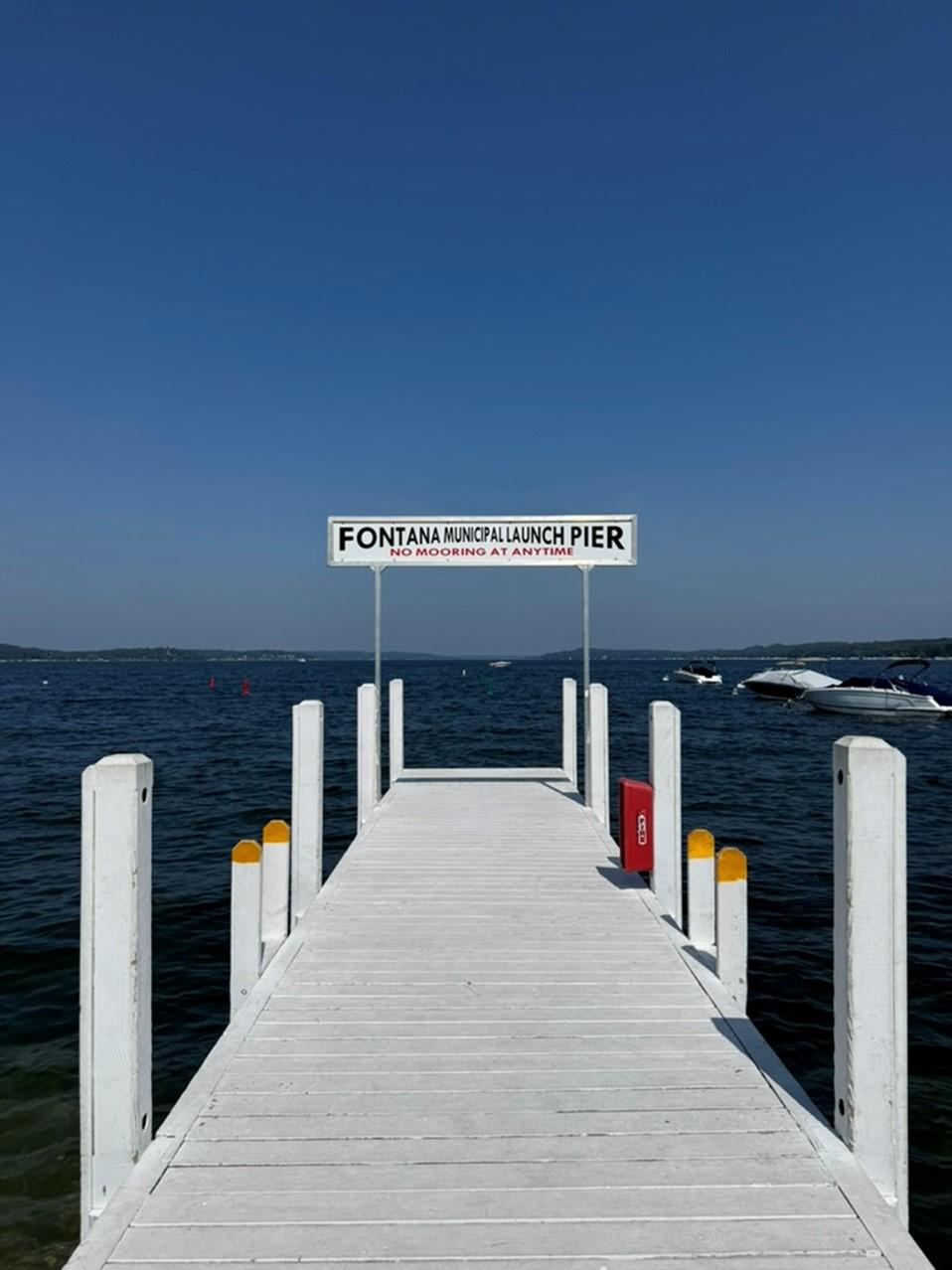
The beautiful Lake Geneva at Fontana. (Caroline Baber)
Community is what sets the Wilderness Medicine Society apart from so many other medical organizations. I was fortunate to experience this firsthand at the 2025 Summer Conference in Lake Geneva, Wisconsin. Surrounded by a beautiful shoreline, cheese curds, and a welcoming atmosphere, this conference was unlike any other.
The conference kicked off with a focus on marine medicine with lectures from Dr. Nochetto, a pioneer from DAN (Divers Alert Network) and Dr. Yanagihara, an expert in marine envenomations. Despite the challenges faced in the water, these sessions inspired me to try scuba diving myself. We then heard from Dr. Mundo, who opened up everyone's minds and hearts with a discussion on inclusivity in outdoor recreation -- an important goal that many of us share but often struggle to put into practice.
Day Two covered a wide range of topics from tick borne disease to the impact of cancer on outdoor activities and heat-related emergencies. As someone living in a desert climate with over 135 days a year above 100˚F, this topic especially resonated with me. From evaporative cooling to integrating cold water immersion therapy into the emergency department, I hope to bring these techniques back to my hospital with hopes of improving hyperthermia management.
Wednesday’s sessions addressed death determination in the wilderness, global health, and event medicine. That day also launched our first ever service-oriented small group activity where 15 participants volunteered for a shoreline cleanup with the Geneva Lake Environmental Agency. This was followed by the most highly anticipated event of the conference, our Auerbach Lecture Series and keynote speaker: Danika Gilbert who shared her first-hand experiences about the challenges and rewards of working as a mountain guide with young women in Afghanistan.
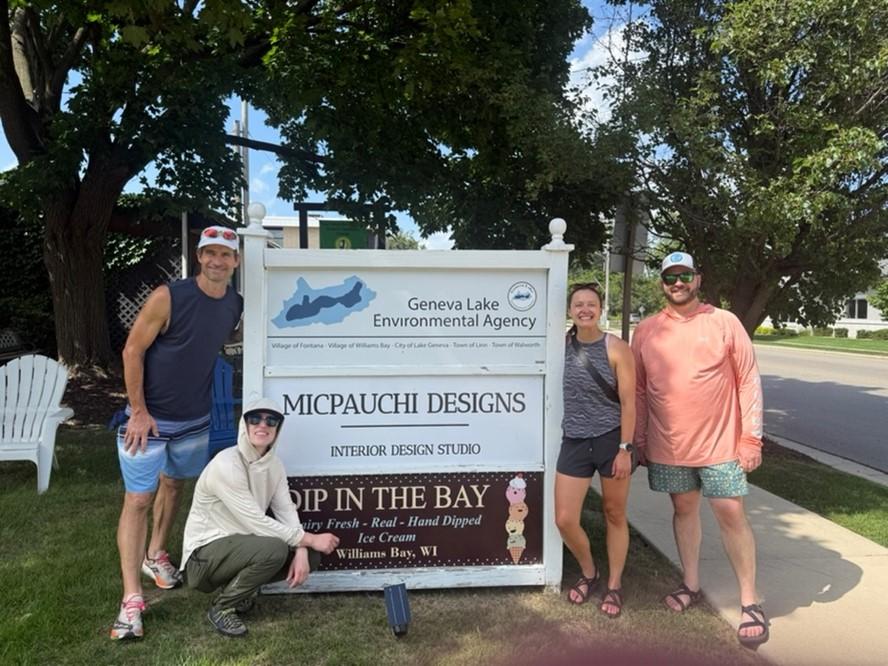
Participants at the service-oriented lake clean up. (Caroline Baber)
All in all, this conference was filled with learning, laughter, and a passion for outdoor education. Whether you’re from the west coast, east coast, or somewhere in between there’s a place for you within the Wilderness Medicine Society. I can’t wait to see what's in store at the next conference this winter!
~ Caroline Baber, DO, FAWM
This past July marked a milestone for the Wilderness Medical Society (WMS), as its summer conference was held in the Midwest for the first time ever. As a Wisconsin native and first-time attendee, I couldn’t pass up the opportunity to experience this event in my own backyard—on the shores of beautiful Lake Geneva, Wisconsin.
Often overlooked by adventurers in favor of more mountainous or coastal regions, the Midwest proved it can hold its own. Lake Geneva delivered with its mix of natural beauty and outdoor recreation. Between sessions on topics like ankle instability and tick-borne diseases, attendees immersed themselves in classic Wisconsin lake life—kayaking, paddleboarding, swimming, boating, cycling, and hiking. Evenings brought campfires, vibrant sunsets, local beer, and plenty of cheese, offering a true taste of the region’s charm and culture.
What surprised me most, though, wasn’t the scenery or the adventures—it was the community. The WMS is remarkably inclusive. Whether you're new to wilderness medicine or a seasoned expert, you're welcomed with open arms. The diversity of the attendees only enriched the experience: physicians from a variety of specialties, advanced practice providers, nurses, EMTs, camp leaders, and professionals from the outdoor industry all contributed to a dynamic and multidisciplinary environment.
The education, of course, was exceptional. A standout session for me was the heat illness workshop, where we practiced cold water immersion techniques using body bags to treat hyperthermic patients—an unforgettable hands-on experience. Another highlight was the lecture on a real-life missile silo rescue, which combined tactical expertise with riveting storytelling. Additionally, the didactic on athlete collapse at the finish line gave us a practical framework for diagnosing and managing this high-stakes scenario.
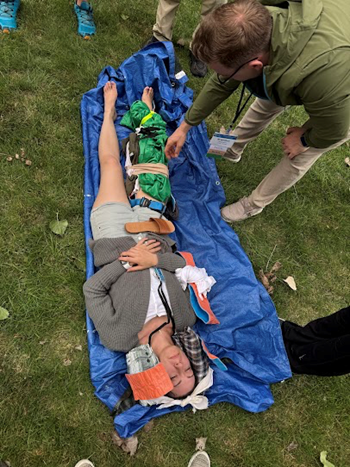
Dr. Negin Ceraolo as a mock patient during the Preconference WLS:MP course. (Jessica Brumbaugh)
Engaging lectures, outdoor adventure, and a strong sense of community made the WMS Summer Conference in Lake Geneva an unforgettable experience. I left feeling inspired, better equipped, and more connected than ever. I already can’t wait for the next one.
~ Alyssa Valentyne, MD
From July 20–24, 2025, the WMS gathered healthcare professionals, outdoor enthusiasts, and field experts in the scenic beauty of Lake Geneva, Wisconsin, for a week where medicine met adventure. The Summer 2025 Conference successfully blended cutting-edge wilderness medicine education with an environment designed for connection, collaboration, and reflection—welcoming attendees both in person and virtually.
Dr. Angel Yanagihara teaching her workshop on life-threatening box jellyfish sting management.(Jessica Brumbaugh)
This year’s venue marked a refreshing change for many. After years of hosting the conference in the western United States, the rotation to Wisconsin was widely appreciated for its accessibility and charm. Dr. Lynn Yonge, MD, FAAFP, MFAWM, Director of the Wilderness Medicine Elective at the University of South Alabama and the Alabama College of Osteopathic Medicine, embraced this shift. Between capturing dozens of lecture slides for his own teaching and absorbing session lessons such as when to stop CPR for hypothermic patients, he was profoundly moved by stories shared by Mark Lopshire, MA, M.Ed, FAWM who more recently served in Ukraine. Inspired, Dr. Yonge began contemplating new ways to bring camping and outdoor skills education to the at-risk youth he supports.
The conference thrived as a hub of shared expertise and practical learning. Sylvia Brandenburg, an emergency medicine APP and Deputy Chief of the Transylvania County Rescue Squad, also found particular value in a workshop on intermittent CPR emerging from hypothermia research. Recognizing its potential impact, she planned to introduce this technique to her team through lectures and hands-on training, especially ahead of the winter season. Similarly, Dr. Zachariah Kamla, DO returned to his military role at Fort Bragg with a renewed focus on tick-borne illness prevention, intent on creating a field-ready protocol for medics. Meanwhile, Dr. Kevin Watkins, MD, FAWM, FACEP an emergency physician and residency associate program director at the Cleveland Clinic Akron General, was inspired to develop an event medicine curriculum for his residents partaking in their wilderness medicine track, reflecting the conference’s practical influence on medical education.
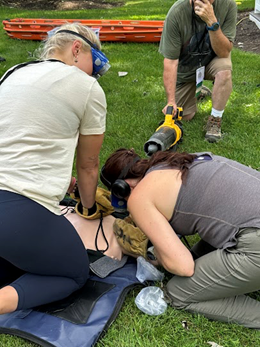
Dr. Aaron Billin teaches a workshop with Elise Lowe on CPR & Death Determination in the Wilderness: Hands On Application. (Jessica Brumbaugh)
Beyond skill-building, WMS 2025 underscored the power of connection. Dr. Stephanie Lareau, MD, MFAWM, DiMM, DiDMM, the new 2025 WMS President, found joy in reconnecting with colleagues from around the world. A session on psychological first aid prompted her to pursue further education and adopt stress-management techniques that she plans to implement in her leadership. Sierra Casper, EMT, WEMT, DiDMM, FAWM, a medical student from Utah, treasured the friendships formed and drew inspiration to establish a peer support team at her medical school, highlighting the community’s ongoing impact.
The conference also kindled personal growth alongside professional development. For Dr. Gary Aaron, a general practitioner from Sydney, Australia, the experience boosted his confidence and leadership capabilities. Preparing for a challenging 6,000-meter climb, he plans to apply lessons learned about delegation and medical readiness. Tanguy Bader, a paramedic pursuing advanced studies in remote medicine, enjoyed the camaraderie of interactive sessions like the event medicine game and found himself motivated to engage more deeply with teaching and wilderness activities.
WMS 2025 offered more than lectures and workshops; it provided a platform for renewed purpose and a global network of wilderness medicine professionals. Discussions ranged from the complexities of missile silo rescues to refining antibiotic protocols for austere environments. Participants such as Elise Lowe and Dr. Aaron Billin, MD, MS, MFAWM reminded the community that the lessons and relationships forged here extend far beyond the conference itself, influencing patient care and outdoor safety worldwide.
Whether attendees came to enhance their medical expertise, share their experiences, or simply recharge in a stunning natural setting, Lake Geneva delivered an unforgettable backdrop. Reflections from the conference reveal that the connections made and insights gained will continue to shape wilderness medicine for years to come.
~ Jessica Brumbaugh, DO
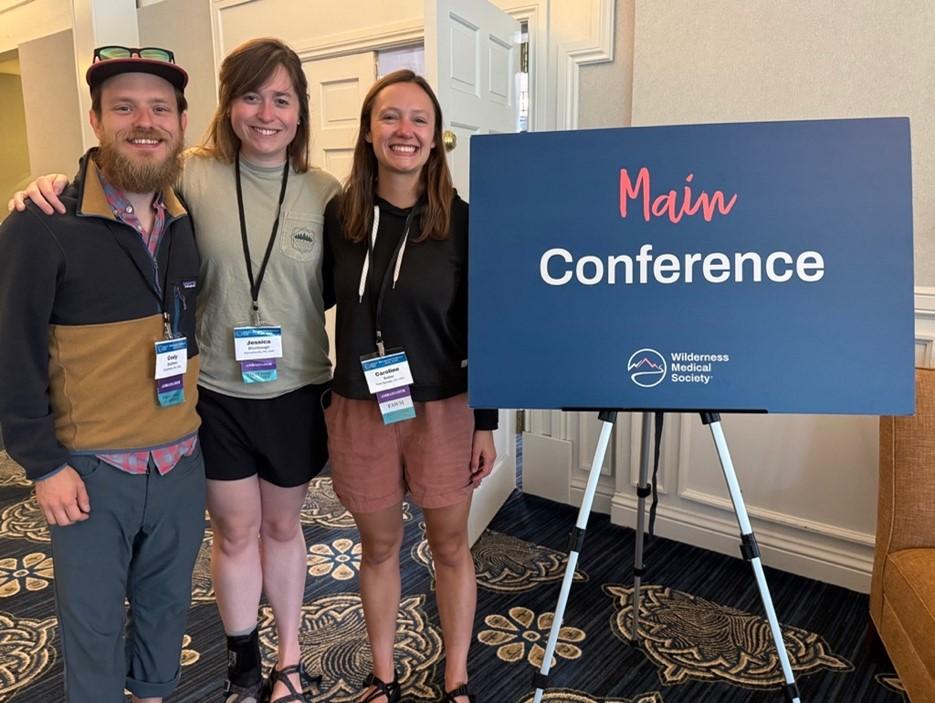
A few of the Ambassadors for the 2025 Summer Conference. (Caroline Baber)