Standing at an altitude of 5,416 meters, Thorang La Pass is the highest point of the Annapurna Circuit Trek. It is a thrilling adventure that attracts trekkers from around the world. As a trekking enthusiast myself, my two friends/colleagues and I embarked on this journey in December 2022.
The adventure began as we left Sindhuli, our workplace, and headed to Besisahar, Lamgunj. The next day, we took a jeep to Manang and spent the night in Manang, preparing ourselves for the trek ahead. On the third day, we started our journey on foot. We trekked slowly and steadily from Manang to Khangsar, Srikharkha, and finally reached Tilicho Base Camp, where we spent the night. The scenery was breathtaking and we were in awe of the amazing landscape that surrounded us. We took regular breaks enjoying the view and tranquillity of the Himalayas.
The next morning, we set out early to conquer Tilicho Lake. The journey was challenging, but the scenery was so stunning that it kept us motivated. As we reached the top, we were rewarded with a breathtaking view – the snow-capped mountains, the half-frozen lake, and the crystal-clear water left us speechless. We took plenty of photos and after soaking in the beauty of the surroundings, we began our descent back to Tilicho Base Camp.
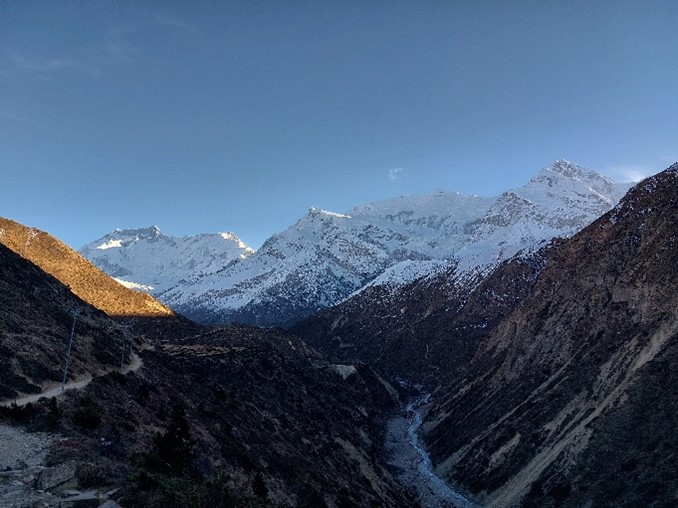
Landscapes on the way to Tilicho. (Ajay Karn)
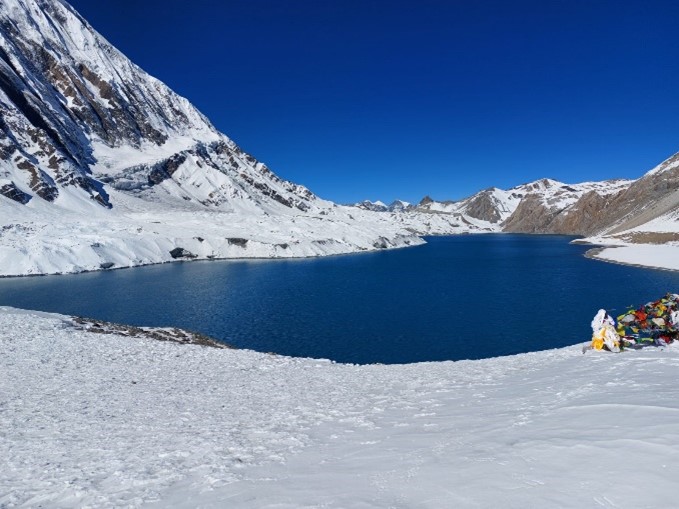
Tilicho Lake, situated at an altitude of 4919m. (Ajay Karn)
After having meal at Tilicho Base Camp, we continued our journey to Yak Kharka. The mostly downhill trail made it a pleasant trek. We arrived just in time to relax in the cozy treehouses, basking in the warmth of the heated rods. We met fellow travelers, shared stories, and enjoyed the peaceful atmosphere. The next day was very challenging as we ascended uphill to Thorang High Camp. The steep incline and scorching sun made it a tough trek. But we persevered, taking it one step at a time. We reached Thorang High Camp in the evening, exhausted but exhilarated.
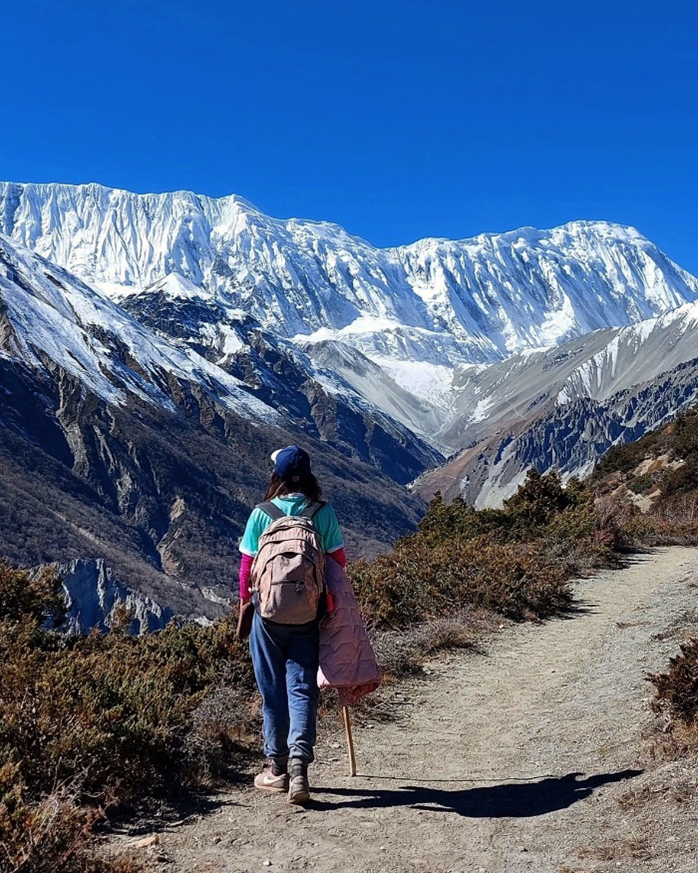
A trail on the way to Yak Kharka from Shree kharkha. (Ajay Karn)
Finally, the day of days arrived – the day we would conquer Thorang La Pass. We woke up early and began the day. The ascent was tougher than expected and we found ourselves lagging behind the other teams. But we didn’t give up. We took it slow, steady, and pushed forward. By midday, we had finally reached the pass. But our celebration was short-lived- the cold wind started to blow and one of my friends started struggling to breathe. At first, we thought it was just exhaustion and the cold. Knowing we shouldn’t stay for long, we began our descent immediately.
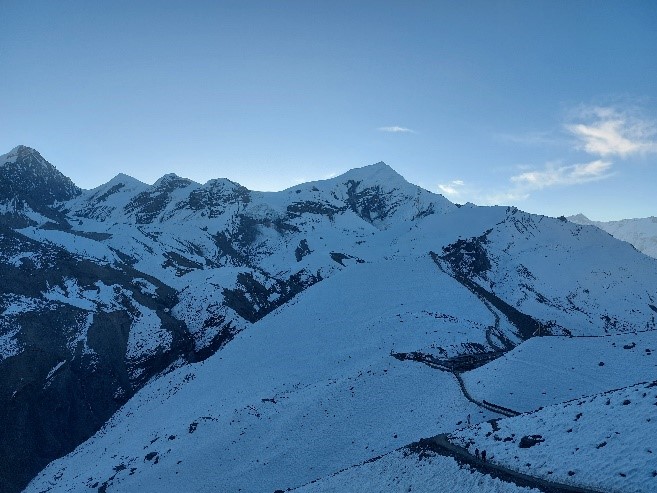
The trail from Thorang High Camp to Thorang La Pass. (Ashmita Pandey)
But his condition worsened. Even at rest, he was battling for every breath. He grew so weak he could barely move. We inspired him, step by step, knowing getting lower was his only hope. But he had no strength left. We were alone—no signal, no help in sight. We made a quick decision: one friend would race down to find help while I stayed with him. His breaths were turning shallow. I felt helpless but knew I had to keep him going. The wind howled around us and the darkness was closing in fast. We needed shelter to get out of the cold. Then, through the fading light, we spotted a small tin hut. I held his hands and encouraged him to take one step at a time so that we can get to the hut. On our way to the shelter, we caught a signal—just enough to call our families and ask for help. Help was on the way. As we reached the hut, I lit a fire with waste cardboards, plastics, and some wood left in the hut, trying to keep him warm, talking to him, keeping his hopes alive.
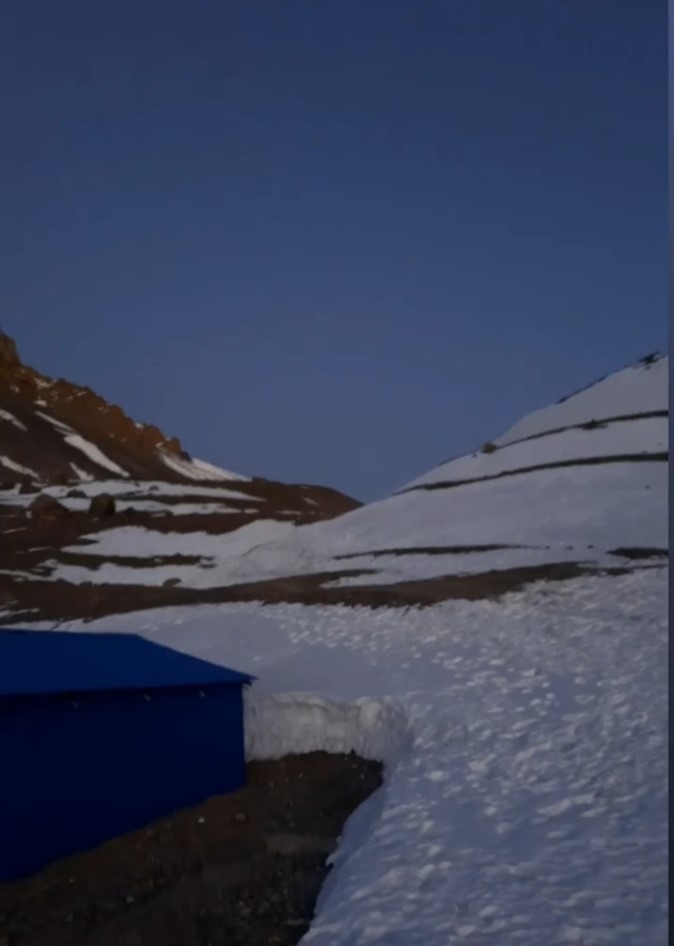
Blue tin hut where we took shelter while descending from Thorang La Pass. (Ashmita Pandey)
After a couple of hours, two local horsemen arrived—sent by our friend who had gone for help. We felt a sense of relief, but it didn’t last. He couldn’t stay upright on the horse. When the locals tried carrying him, it was not helpful either. We then took refuge in another hut.
He was getting more critical. I vividly remember his weak voice when he whispered, “Let me talk to my family, I don’t think I’ll make it.” My heart broke, but I refused to let him give up. “Hold on,” I told him. “The army is coming.”
Finally, at around 8 PM, two soldiers arrived with medicine—including an inhaler we’d asked for. He grabbed it and took desperate puffs. It helped a little, but not enough. There was no time left. Two soldiers held him up by his arms on both side and helped him stand and walk. We raced down the mountain in the pitch-black night, lighting our way with a phone torch, slipping, scrambling and chasing the distant glow of flashlights. I don’t know how we made it, but by midnight, we reached Mustang. His oxygen levels were dangerously low, so we rushed him straight to the hospital. He was admitted for a couple of days and discharged. We felt like we had been given a second chance at life.
That night at Thorang La was one of the scariest experiences of my life. It tested my physical and emotional limits. It also opened my eyes to how serious HAPE can be- it can hit anyone, even the strongest among us, Because the friend who got sick was the fittest one in the group, the one who had led and guided us until then.
I will be forever grateful to those who helped us. But that night also showed me something powerful- the reservoir of resilience, strength and courage I didn’t know I had. Looking back, I am proud of the strength I discovered in the face of adversity.