WMS Conference
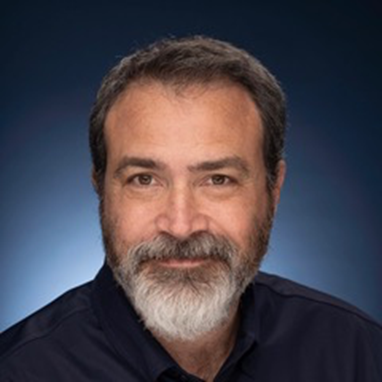
Ambassador Cody Stothers interviews Dr. Matias Nochetto, a featured speaker at
the upcoming Summer Conference, about his work with the Divers Alert Network
(DAN) and how the organization has shaped undersea and hyperbaric medicine for
over four decades.
Dr. Cody Stothers (CS): What is the most
common misconception you encounter in the lay public regarding diving-related
injury?
Dr. Matias Nochetto (MN): There are
quite a few, but one of the most common is the belief that decompression
sickness (DCS) must be treated immediately in a recompression chamber or
serious harm will result. While some cases do require timely chamber treatment,
the vast majority of cases are mild. In mild cases, delays in treatment are not
associated with worse outcomes and the prognosis tends to be good regardless. This
remains a challenge for DAN. Even after twenty years of data supporting this,
many divers still panic at the mere suspicion of DCI and insist on knowing the
exact location of the nearest hyperbaric chamber. But it is important to
understand that a chamber is a treatment center, not a diagnostic facility. Think
of it like a dialysis unit: if you suspect you developed acute kidney failure
on a trip, your first stop wouldn’t be to run to the dialysis center, it would
be the emergency room, where you could be assessed, stabilized, and referred to
the right place if needed, which may or may not include dialysis. The same principle
applies to diving injuries. Symptoms suggestive of DCI could also point to
other serious conditions, like stroke, heart attack, pneumothorax, etc. That’s
why the first step should always be evaluation at the nearest emergency
department. Once a diagnosis is made, the medical team, often in coordination
with DAN, can arrange transfer to a chamber if a chamber is actually needed.
The other issue is that not all chambers are the same. A chamber is just a
medical device; different chambers can have different technical capabilities
and different teams can have different operational capabilities. Is this a
monoplace unit in a free-standing clinic or is this a multiplace unit with ACLS
capabilities in a hospital setting? Once we have a fairly good idea on what
might be going on, we might not necessarily recommend the closest chamber but
the most appropriate for what is going on. So no, knowing where the closest chamber
is not always the best course of action.
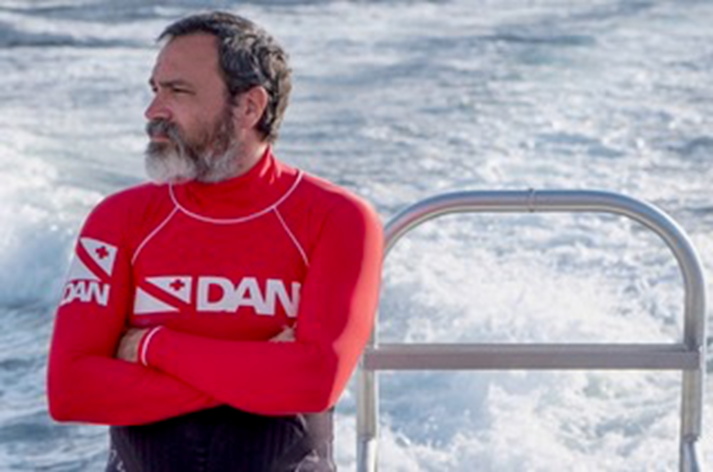
(CS): Given its unique business model and somewhat limited target population, how has DAN sustained itself as an organization for over 40 years?
(MN): Great question. You can’t serve divers effectively if you’re not financially strong, but you also can’t sustain financial health without delivering real value and staying mission-driven. A cornerstone of our model is the DAN membership program. DAN Members gain access to a range of valuable services, including robust TravelAssist benefits; but most also choose to add dive accident insurance (an exclusive membership benefit) which gives them financial peace of mind if they ever need to face costly hyperbaric treatments. It is this insurance program that helps fund the infrastructure behind our medical services, research, and training initiatives. Recreational diving is a relatively small, niche market, but it’s global. Our members represent a highly engaged subset of divers who value safety and education. They, along with the industry at large, recognize the value DAN brings: a 24/7 emergency hotline, diving medical expertise services, research publications, CME programs for physicians, injury surveillance, and strong partnerships with training agencies, operators, and hyperbaric facilities. This positions DAN not just as an insurance provider, but as a trusted, mission-driven safety organization. Our emergency hotline, medical information line, and many of our safety resources remain available to all divers, members or not. That’s at our core, our Mission. Ultimately, DAN has endured because of its dual identity: we’re a nonprofit with a clear mission and a reliable service provider. Think of us as a hybrid between the Red Cross and AAA, but for divers. That model allows us to reinvest in safety, build lasting trust, and stay relevant as the dive industry continues to evolve.
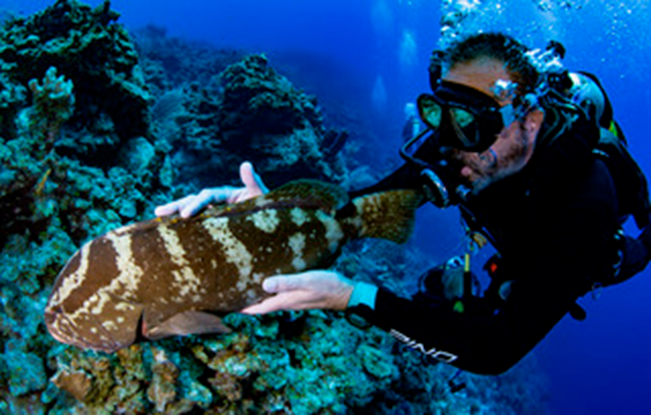
(CS): How is DAN contributing to research and cutting-edge treatments for diving-related injuries?
(MN): DAN is a very unique organization. It was created in 1980 to serve a very specific need: divers in distress needed access to emergency medical assistance from professionals who understood the unique physiology and risks of diving. What began as a 24/7 emergency hotline based at Duke University has grown into a global network supporting divers through medical services, safety programs, and scientific research. From the beginning, DAN has recognized that advancing dive safety requires more than just responding to emergencies, it requires answering the questions no one else is answering. Over the last 45 years, DAN has conducted research that has directly shaped how we prevent, recognize, and treat diving injuries. One of our most notable efforts was our work on Flying After Diving (FAD) guidelines. DAN spent nearly two decades conducting experimental studies to determine how soon one could fly following a dive. This meant conducting thousands of simulated chamber dives (hyperbaric exposures) followed by simulated flights (hypobaric exposures). That means bending people, and unbending them, of course. That research effort involved an investment of over $4 million and led to the development of the first evidence-based guidelines for flying after diving, now universally accepted around the world both in civilian, commercial, and military diving. We’ve also published landmark studies on diving with diabetes, asthma, the role of a PFO (patent foramen ovale) in the pathogenesis of some serious forms of DCI, and produced annual reports and epidemiological studies on diving injuries and fatalities that continue to inform safety protocols worldwide. Through workshops, consensus meetings, symposia, and also through funding research worldwide, we bring together experts to tackle emerging challenges in dive medicine. Today, DAN remains committed to that original mission: helping divers in need, while building the knowledge that makes diving safer for everyone.
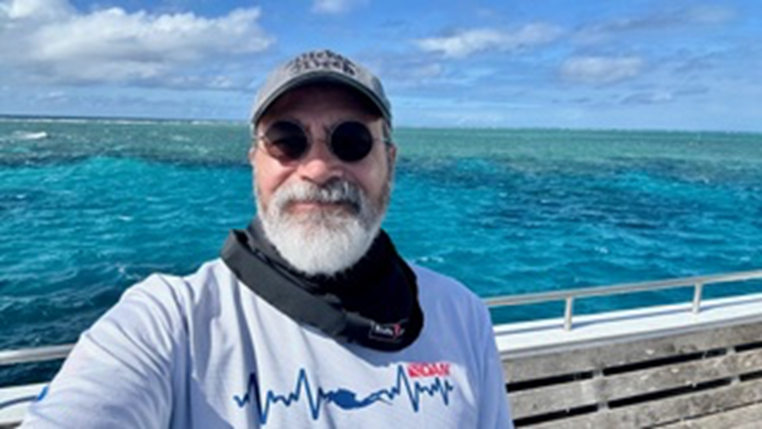
(CS): What is the most exciting evolution in undersea medicine coming in the next decade?
(MN): It’s hard to predict with certainty, but one of the most exciting developments we foresee is how technology and connectivity will reshape access to expert medical consultation in remote locations. Whether you call it telemedicine or telepresence, the impact is the same. Until not so long ago, a dive expedition to places like Bikini Atoll, Kiribati, or Tonga meant complete isolation and no expectation of outside medical help. Today, many of these vessels have satellite internet and a video call with a medical expert is just a tap away. Of course, telemedicine has inherent limitations. There’s only so much one can do remotely, especially in acute or hands-on situations. But the reality is: a lot can be done in terms of triage, guidance, decision support, even supervised interventions. The real challenge isn’t operational, though, it’s medico-legal. Even if you do the right thing and achieve a good outcome, it might still be illegal depending on local laws governing medical practice and telehealth. That’s the evolving frontier. The next decade will be shaped not just by what technology can do, but by how law and policy adapt to what it should allow.
(CS): How can wilderness medicine professionals-in-training get involved with DAN early in their careers?
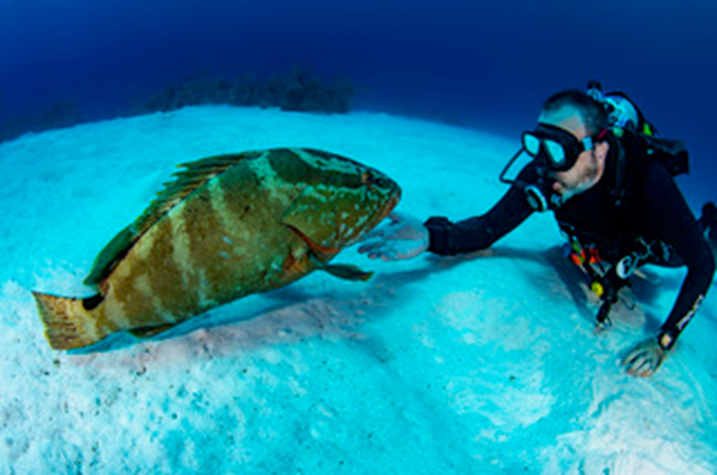
(MN): DAN offers several ways to get involved early on. Our publications, website, Medical Information Line, and CME programs are excellent starting points. We host the longest-running diving and hyperbaric medicine CME course in the world, running strong since 1982. Over the decades, we’ve trained hundreds of physicians and healthcare professionals, helping build global capacity to connect divers with dive medicine doctors and manage diving-related injuries in remote areas as well. We encourage all WMS clinicians to join us at our CME and why not have some fun and dive with us!
(CS): What is the best way for the broader wilderness medicine community to help DAN’s mission and values?
(MN): There’s a natural overlap between wilderness medicine and diving medicine. After all, the best dive sites are often in remote locations, which, by definition, are the worst places to get injured. Managing diving injuries in those remote settings is what DAN does every day. WMS has increasingly recognized this and many of their fellows now rotate with our team for a few days. We love hosting them. They get a unique experience in a one-of-a-kind setting and we get to engage with sharp, curious minds who share our passion for remote medicine. DAN functions much like a Poison Control Center: we receive calls from laypeople experiencing symptoms after a dive and from healthcare professionals treating symptomatic divers. These calls come from anywhere in the world, 24/7. And we’ve been doing this continuously, as a humanitarian service, for 45 years. We truly value our partnership with WMS. It’s a win-win: we enrich their fellowship programs, and in doing so, we help expand global knowledge of diving medicine, ultimately benefiting the broader diving community.