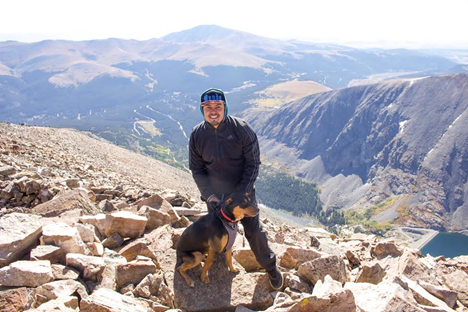
WMS Summer Conference speaker Dr. William Mundo joined Conference Ambassador Alden Harring for an interview.
Dr. William Mundo hails from the mountains of Colorado and credits his father’s role as a community healer with sparking his interest in medicine. While studying pre-med courses at the University of Colorado Denver, he took an interest in Public Health and Ethnic Studies. He subsequently pursued an MPH at the Colorado School of Public Health focusing on Global Health Systems Management and Policy. Prior to medical school at the University of Colorado School of Medicine, Dr. Mundo worked as an EMT and taught WFA and WFR courses.
Dr. Mundo is currently an emergency medicine chief resident physician at Denver Health Medical Center and is the author of “From Margins to Medicine: A First-Generation Student’s Equity Guide in Overcoming Adversity with Diversity”.
Continuing his dedication to advocating for diversity and inclusion, Dr. Mundo is leading a discussion on inclusive wilderness education at the upcoming WMS Summer Conference. We conducted this interview via email.
Alden Harring (AH): We are all excited to hear your upcoming talk during this summer’s conference. What initially sparked your interest in inclusive wilderness education?
Dr. William Mundo (WM): My interest stems from my desire to see others like me find a sense of belonging in the outdoors. Growing up in the mountains of Colorado as a first-generation and minority person, I often felt like I didn’t belong or that wilderness was not for someone like me. Inclusive wilderness medicine became a way for me to break down those barriers and ensure nature is accessible to all regardless of background or abilities.
AH: Inclusion and accessibility may mean different things to different people, whether that is physically accessible sites, recognition of indigenous lands, involvement of multiple learning styles, or queer friendly wilderness spaces. What does inclusive wilderness education mean to you?
WM: To me inclusive wilderness education means creating spaces that recognize and honor diverse experiences, identities, and needs. Ultimately, it means ensuring everyone feels safe, valued, and empowered to connect with nature in their own way.
AH: What are some barriers that you have faced in striving for inclusive wilderness education and how can fellow educators and wilderness enthusiasts help be part of the solution?
WM: I’ve faced barriers like limited financial resources, lack of representation, and environments that didn’t feel welcoming or safe. Fellow educators can help by bringing marginalized voices to the table. They can also advocate for accessible and culturally respectful spaces and being intentional about designing programs that include diverse perspectives. Small steps like outreach to underrepresented communities or incorporating diverse narratives can make a big difference.
AH: How would you like to see information regarding creating inclusive educational spaces, wilderness and otherwise, integrated into medical and professional education?
WM: I would like to see inclusive wilderness principles embedded into existing wilderness medicine education, in particular in the space around mental health and wellbeing in austere environments. It could include curriculum on cultural humility, accessibility, psychological first aid, and trauma-informed practices.
AH: Change and improvement comes from both societal and individual levels. What changes would you like to see on a larger scale and what are some individual efforts that you make to ensure inclusive wilderness education?
WM: On a societal level, I would like to see policies that promote equitable access to outdoor spaces via increasing funding for community-based programs. From a personal perspective, I try to support initiatives that promote diversity in outdoor education, mentorship, research, and amplifying underrepresented voices.
AH: Coming from your background in public health, how can inclusive wilderness spaces be used as a means of improving community-wide health and reducing health disparities?
WM: Inclusive wilderness spaces can serve as an accessible and pragmatic way to increase physical activity, provide mental health relief, and social connection - all which are critical needs to live and lead a healthy life. Inclusive wilderness spaces can ensure everyone can benefit from nature and foster community resilience.
AH: Thank you for taking the time for this interview! Any parting advice for students and trainees?
WM: Never lose sight of the fact that everyone’s experience in the wilderness is unique and valuable. Be open-minded, listen deeply, and advocate for spaces that include everyone. Your efforts can help shape a future where outdoors is a place of healing and belonging for all, regardless of background or ability.