WMS Conference Student Ambassador, Tylin Stiller, interviews one of the Winter Conference’s featured speakers, Dr. Brian Strickland.
Dr. Strickland completed his residency in Emergency Medicine at University of Chicago before working in urban, rural, and remote settings, including a year practicing in rural Northwest Alaska and another year in Saipan. Dr. Strickland completed his Wilderness Medical Fellowship at Massachusetts General Hospital in Boston in 2021, as well as completing his DiMM in Vermont with the Military Mountain Medicine course (MMED). In the spring of 2020, he volunteered with the Himalayan Rescue Association at the Pheriche aid post in Nepal. When the COVID-19 pandemic ended the Everest season, he assisted with the MGH response before returning for a second season in Pheriche over Spring 2024. Dr. Strickland continues to work in the Northern Mariana Islands to provide emergency medical care and improve the provision of healthcare on the remote islands.
Throughout these travels, Dr. Strickland has coordinated research on use of inhalational nitric oxide in treating respiratory distress in COVID-19, prevention of acute mountain sickness, use of CPAP to improve exertional capacity at altitude, nitric oxide uses in austere medical conditions, and high-altitude education. He is co-author of “Risk Management for Diving Operations”. When not in a clinical setting, he is travelling, scuba diving, skiing, motorcycling, or volunteering.
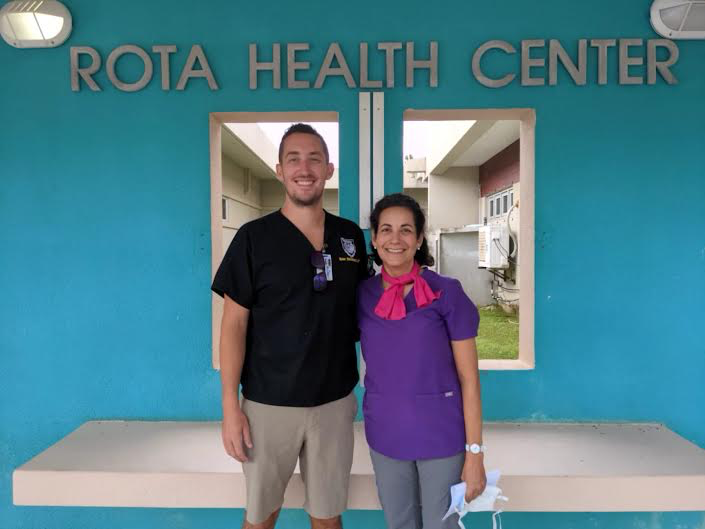
Dr. Strickland at Rota Health Center, one of the smaller island healthcare facilities in the region.
How did you get interested and started in wilderness medicine?
Since I was young, I’ve always been fascinated by remote places. I wanted to know what these places were, how one could get there, how people integrated with their environment, and what it was, be it work, family, opportunities, or an ancestral connection that was drawing them to this random place. As I started to develop my career and entered medical school, I realized I wanted to incorporate that into my future. When I started looking for real-world experience, I took a year off medical school and spent it in a high-altitude clinic in Peru. There was a great deal of environmental impacts on health there that I would have never learned about from a textbook, although I was not aware of wilderness medicine as an organized field at the time. I didn’t get to capitalize on that interest until residency, when I realized that I wanted to formalize my medical education in a way that let me do scholarly work while exploring these parts of the world. I pursued a WMS fellowship at Massachusetts General Hospital that combined my past interest and experience in global health and wilderness medicine.
Can you give me an idea about what an acute medical emergency and evacuation looks like in an isolated island setting with the diagnostic tools and transport available
When breaking down a medical emergency into its fundamental parts and coming up with a treatment strategy, we are always trying to diagnose and reverse acute pathology using the resources we have at our disposal. Even in an urban setting, we don’t always have the latest and greatest tools, and the information needed to make a decision isn’t always there. When a patient’s needs exceed our capabilities or resources, we need to move our patient to a more optimal location if those resources cannot be brought in. In an urban setting, we call this a transfer - in austere settings, this is an evacuation. Despite the different name, the thought process is quite similar.
Evacuations and patient transfers look very different on an island just based on geographic barriers alone. We often face hundreds of miles of separation from a higher level of care, with no land route available. Helicopters in the Northern Mariana Islands are used but are limited in range by fuel and require the military to authorize transport. Boats do not have these limitations. However, in cases of high patient acuity, their relatively slow speed makes them difficult to utilize. Fixed-wing aircraft might be an option but isn’t always helpful because it requires a runway and the smaller islands with tiny populations and rugged topography don’t have that.
Beyond the geographic challenges, there is always the economic barrier- very few people have medical or evacuation insurance nor the ability to pay outright for transport, so there is no formal aeromedical company servicing the region. Our best option in most cases is to work to stabilize patients so they can board a commercial flight to a higher-level hospital in Guam or the Philippines.
Often the biggest barriers to care and hospital transfer would be the legal and immigration implications, an issue which is not common in many other wilderness conditions. Every island has its own rules and procedures and despite their relative proximity, island chains are not always a part of the same jurisdiction. Despite this, many island nations have a diversity of ethnicities and nationalities. For instance, the Northern Mariana Islands has a very high percentage of immigrants, who are often undocumented. Although a larger island like Guam would seem like an obvious location to evacuate a patient to, this isn’t an option for many immigrant patients. Without a visa, the airline won't let them on the plane, Customs and Border Patrol won't let them fly, and the military typically considers only US citizens eligible for helicopter transport. These things add a lot of layers when considering evacuations.
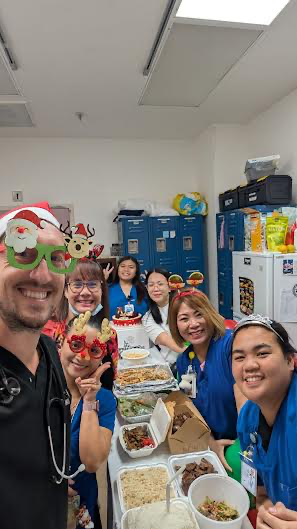
Dr. Strickland and staff at Commonwealth Health Center.
What are the most common medical issues you encounter in Saipan?
Chronic conditions are common regardless of wherever in the world you are practicing. In this setting, I see a lot of pathology related to untreated hypertension and diabetes, as well as exacerbations of chronic illnesses. While these problems are not the esoteric medical issues we read about in journals and popular media, they result from environmental conditions on islands and have severe morbidity due to the lower resources available to treat them. Of course, in an island setting, I do see marine envenomations, marine trauma, and interesting environmental and infectious diseases that are endemic to the region. I’ll talk about this in my lecture!
You have done a lot of research in high altitude and austere settings. How do you incorporate that goal into practice across linguistic, cultural, and resource barriers?
When it comes to scholarly work, my passion is obtaining high-quality hard-to-collect data. From the increased planning requirements to overcoming environmental challenges, finding and obtaining valuable data in these places is inherently more exciting and rewarding to me. I am not alone in finding this research stimulating, as many medical professionals share the same interests, like at this conference! Nonetheless, the impact of these studied conditions tends to disproportionately affect socioeconomically disadvantaged individuals living in these conditions over the medical professionals discussing them. Therefore, my focus when I do this kind of research is to obtain data that is specifically useful to the affected communities, ensuring that the information we are collecting and the solutions we propose are practical and apply to the patients who need them.
What advice would you give to a healthcare provider looking for opportunities to work in remote island settings?
Regardless of resources, practicing medicine in a remote island setting offers an incredibly rewarding experience that will challenge and refine your clinical skills. Without the layers of bureaucracy and red tape often encountered in modern healthcare systems, you can find significantly greater autonomy and the opportunity to practice medicine in its purest form. However, this autonomy comes with its own challenges—the absence of familiar resources such as specialist consultants and advanced facilities like a cath lab means you’ll rely more on your training, resourcefulness, and decision-making abilities. You’ll not only make a tangible impact on the lives of a community, but also experience the fulfillment of practicing in a setting where your expertise is deeply valued. It’s a chance to step outside the comforts of modern practice and embrace the challenges of making a meaningful difference in a resource-limited yet dynamic healthcare environment.
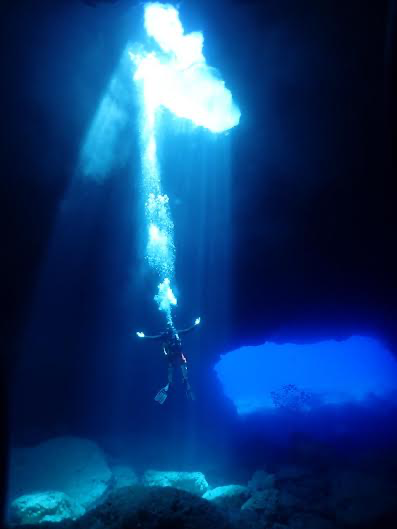
Dr. Strickland diving off of the Northern Mariana Islands.
Has working in Saipan, Nepal, Alaska, and other austere settings changed how you practice in more traditional settings and how?
Working in all these places has certainly increased my comfort level in dealing with the uncertain. There is not always a way to make that definitive diagnosis, so working there has enhanced my ability to prioritize and deliver effective care when the full picture just isn’t there. In a lot of ways, that is still what I do in any ED setting, even in a large US city. Learning to think and be comfortable in that setting makes all of us better physicians, regardless of our practice environment. Regardless of where we practice, we are still going to be working with different cultures, languages, and expectations for care. I think this will be more important as our healthcare system confronts the challenges that are rapidly developing ahead.
A big thank you to Dr. Brian Strickland for this interview! Wilderness Medicine Magazine readers, for more on remote island healthcare, Dr. Strickland will be speaking at the WMS Conference in Crested Butte, Colorado from February 2-5, 2025.