WMS Conference Student Ambassador, Jessica Smith, interviews one of the Winter Conference’s featured speakers, Dr. Craig Kutz.
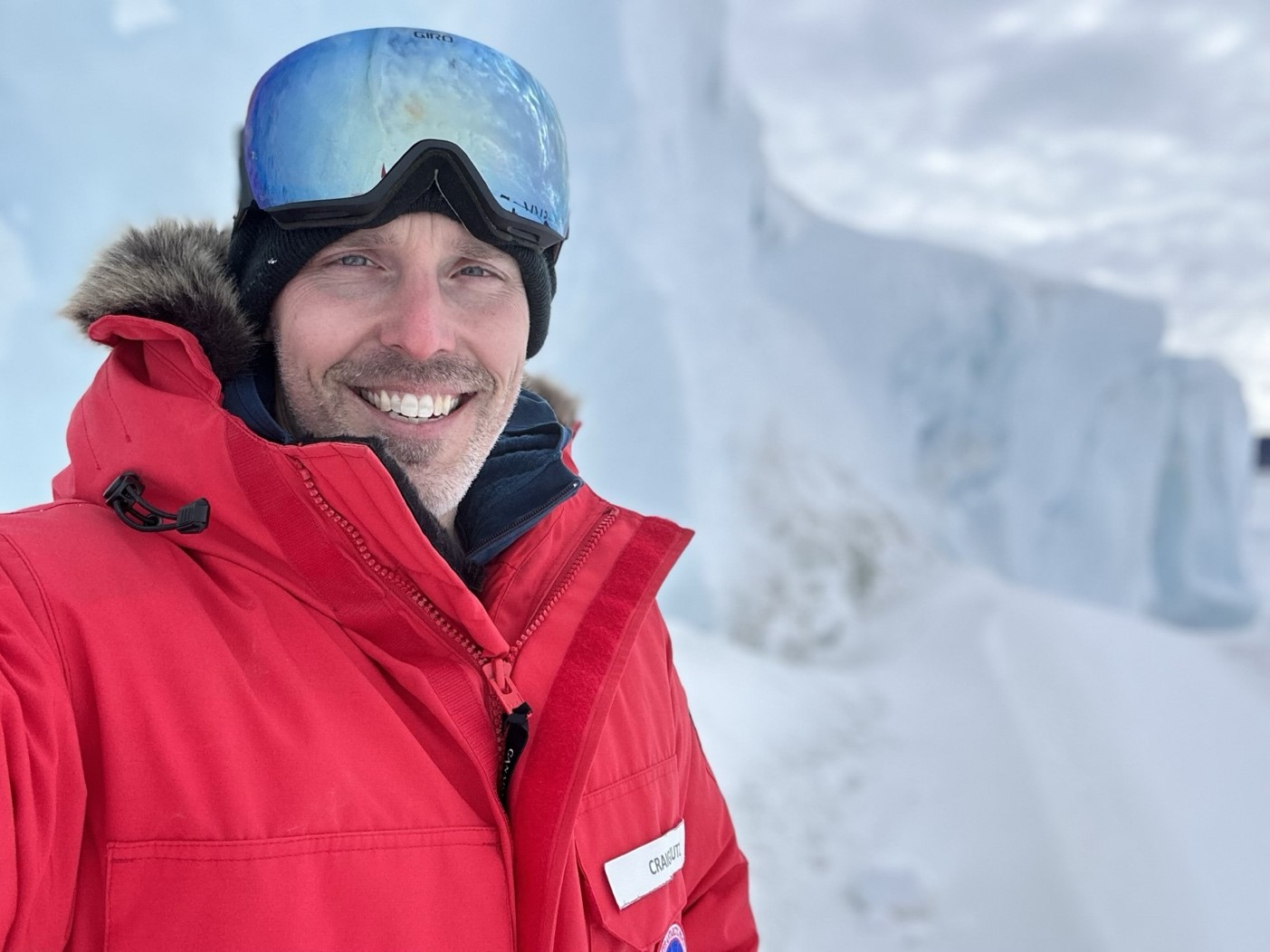
Dr. Craig Kutz at McMurdo Station, Antartica
Dr. Craig Kutz is boarded in Emergency, Undersea/Hyperbaric, and Aerospace Medicine. He completed residency/fellowship at UC-San Diego and University of Texas Medical Branch (UTMB). He received his DiMM in 2021 with the International Mountain Medicine Center at the University of New Mexico and FAWM in 2020. During austral summer 2023, Dr. Kutz was a clinical physician for the UTMB Center for Polar Medical Operations at McMurdo Station, as part of the NSF US Antarctic Program. He was the WMS faculty and trip lead for the Everest Basecamp Adventure Education in Spring 2024 and has worked as a volunteer physician with the Himalayan Rescue Association (Manang Aid Station). He previously worked as a helicopter EMS paramedic and flight physician in San Diego County.
Currently, Dr. Kutz works for Human Health and Performance Contract at NASA-Johnson Space Center as an Operational Flight Surgeon. He is a member of the NASA Divers/Suit-Subjects Medical Board and was an instructor for the Emergency Dive Accident Management course at the NASA Neutral Buoyancy Lab. He has provided field medical support for ballistic Soyuz re-entry and is assigned as the Deputy Crew Surgeon for NASA’s SpaceX Crew.
His academic publications and contributions include diving medicine, aviation decompression sickness, hypoxia physiology in rebreather divers, mountain sickness prevention, pulmonary barotrauma in spaceflight, emergency care for the aerospace patient, and pharmacologic interventions for psychiatric emergencies in Earth-independent medical operations. Outside of clinical work, he is an AAUS scientific diver, pilot, and enjoys skiing, backpacking, climbing, biking, and mountaineering.
Disclosures: Dr. Kutz does NOT represent the NSF or United States Antarctic Program or the UTMB Center for Polar Medicine, but is speaking from his personal experience during his time in this position. This interview was conducted over email.
Jessica Smith (JS): Dr. Kutz, thank you for taking the time to speak with me. As a medical student, I am always curious about how people find opportunities. How did you get involved with Polar Medical Operations at McMurdo Station?
Dr. Craig Kutz (CK): My time at McMurdo Station was through the University of Texas Medical Branch (UTMB) Center for Polar Medical Operations, in particular as part of my Aerospace Medicine subspecialty training. The UTMB Aerospace Medicine program is an ACGME-accredited training focused on the care of patients in extreme environments such as aviation, space, hypo- and hyperbarics. Lessons learned in austere places like Antarctica provide unique insight and training into challenges faced with prevention, resource allocation, patient stabilization and evacuation under extreme stressors – all crucial in medical care for Earth-independent spaceflight. Secondarily, a personal and professional interest of mine is patient care within difficult austere terrain/climates and providing care with limited resources. It seemed like the perfect place for an Emergency Medicine physician to practice! I completed my FAWM through the WMS and DiMM at the University of New Mexico. The tools I learned from these experiences added to my desire to pursue an opportunity in Antarctica.
JS: This sounds like an incredible opportunity! Would you take the position at McMurdo Station again if given the opportunity?
CK: Absolutely – in fact, I hope to have the opportunity to practice medicine at other US Antarctica facilities someday. During my time on the ice, I was able to provide patient care briefly at the South Pole Station as well. “Winter-over”, or staying at the station through the Antarctica Winter, is one of the most challenging assignments due to the limits on evacuation, harsh weather, and resource limitations. At some point in my career, I’d like to take on that responsibility – but it’s a big, 9-month commitment away from family and friends (and dogs)!
JS: That makes a lot of sense. Speaking on those challenges, what skill or personality trait is most critical to being successful in the Antarctic environment?
CK: Being “the doctor” is not your only role on station, so versatility and utilizing your skills in other areas comes in handy! For instance, sometimes you are the mechanic, the dishwasher, the janitor, the plumber… you name it. Along that line, adaptability is key. Often you need to think outside the box for simple things, both in medicine and everyday life. Certainly, your primary role is medicine and trusting in your skills is important. You are (literally and figuratively) on an isolated continent. That referral to orthopedic surgery or ophthalmology is not around the corner. Because you are isolated, to be successful it’s important to optimize your team and resources wisely. My team I worked with was incredible!
JS: I would love to hear more about your team! Additionally, what was your favorite memory during your time in Antarctica?
CK: Such a hard question to answer as there are so many good ones. My talk at the WMS Conference will highlight many of them! No spoilers here! But the people are truly what makes Antarctica special. The foundation of the overall mission at research stations in Antarctica is based on teamwork and resiliency. The whole station plays an intricate role to the success of that mission. The friendships you make, the challenges you face together, the stresses you encounter – each provide special moments.
JS: I can’t imagine what the unique stressors are like in that environment. What was the biggest adaptations that you had to make for your medical service at McMurdo Station?
CK: My primary specialty is emergency medicine, and in the end, you practice just as you would back in the states – do what’s best for the patient and the overall mission. All of the stations in Antarctica provide an extraordinarily high level of care for patients. We often say “resource limited”, but the capabilities at McMurdo are similar to an Emergency Room. Also, although common within any prolonged field or deployed care, one of the biggest challenges is the visibility of being a physician within the community at all times. During dinner, at the gym, out on a hike – you are still the subject matter expert in medical care. Even if your shift ends, you always represent the clinic and medical. You build rapport with the stations’ community and balance the roles you play as a friend, but also as their physician. If anyone has had that family member ask them medical advice at the holiday dinner knows, striking that balance can be a challenge.
JS: Well, thank you Dr. Kutz for taking the time to give this interview. WMS Magazine readers, for more on Dr. Kutz and Antarctic medicine, be sure to hear him speak at the WMS Conference in Crested Butte Colorado this February 2-5, 2025.
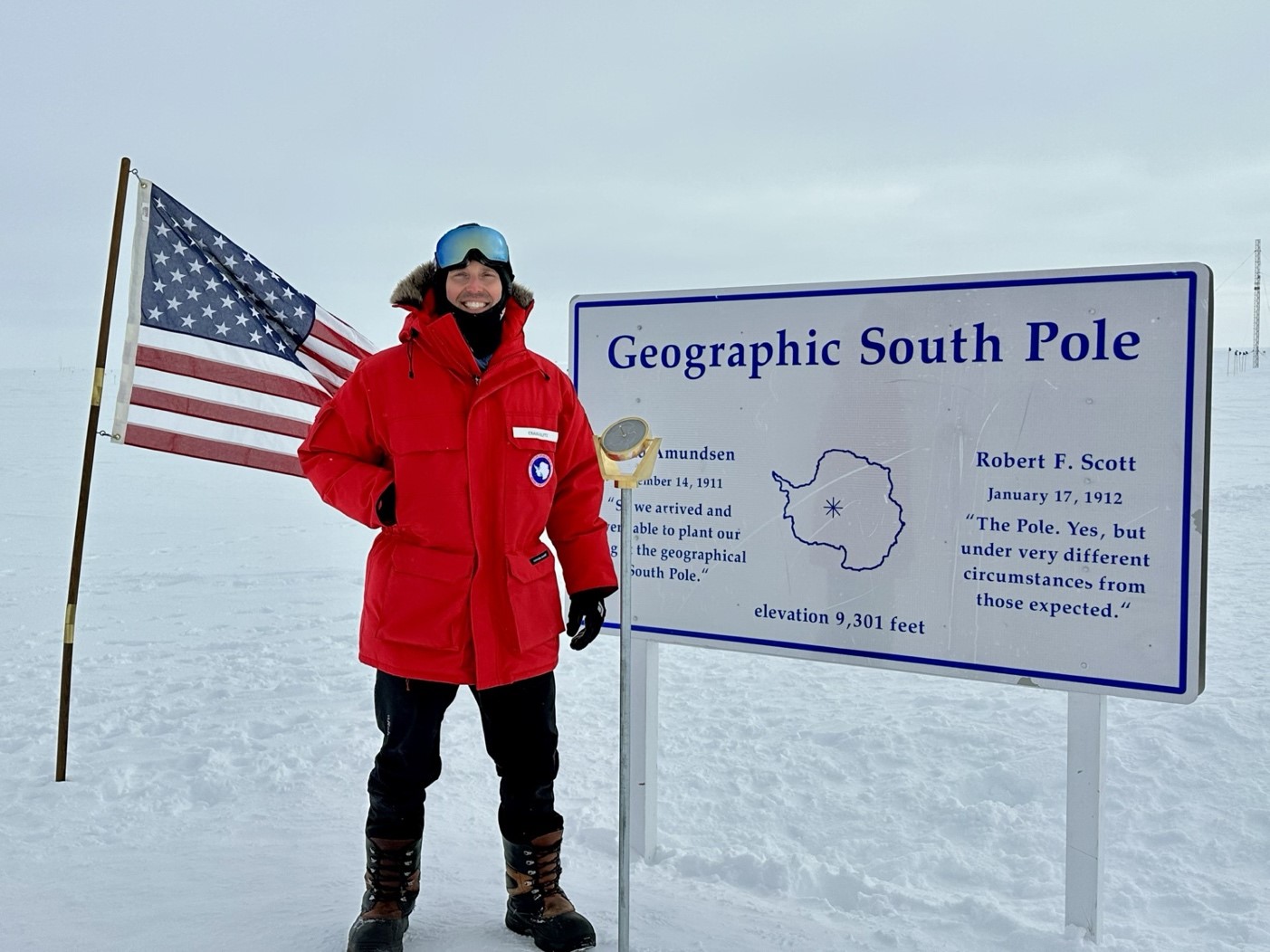
Dr. Craig Kutz at the Geographic South Pole as a part of the NSF US Antarctic Program