Expedition Column Editor, Sarah Spelsberg, reached out to several renowned mountaineers and rescue team members for their thoughts on the duty to act when in extreme environments.
The duty to rescue in wilderness emergencies can be complicated. Some feel they should risk everything to help another, others feel disinclined to take on additional personal risk, and many lack the skills, training, or equipment to rescue. This tension was tragically exemplified during the fatal 2023 K2 incident, when hundreds of climbers passed Mohammed Hassan, an injured porter, and were unable or unwilling to intervene.
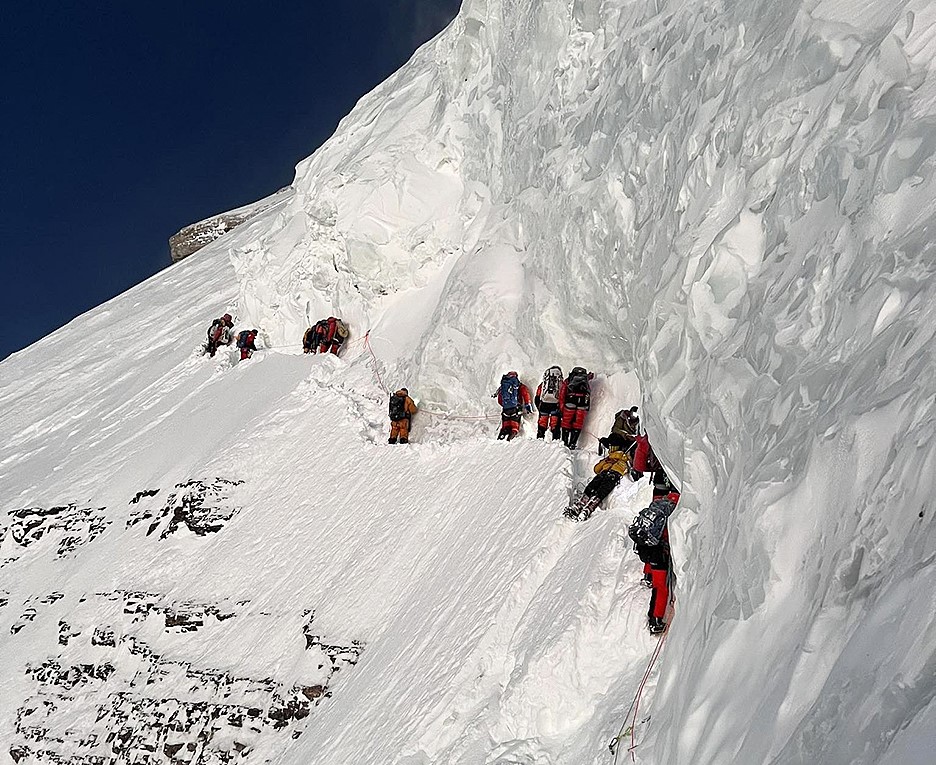
The traverse under the Great Serac on July 27, 2023. Climbers are clipped to the rope and Hassan is lying down in the snow, in black pants and a yellow jacket. Photo: Lakpa Sherpa/8K Expeditions
Mohammed Hassan
Hassan’s death, after falling at 8,200 meters off a perilous pitch, stirred global discussions regarding duty to act and capabilities needed for high acuity rescue. Many claimed they believed help was already enroute and acknowledged they lacked the skills or equipment for a steep pitch response. They may have trained for the climb but lacked the fitness and skills to perform a rescue. In harsh, isolated landscapes, assessing one’s capability to help safely, while balancing the ethics of inaction, challenges our moral judgment and sense of responsibility. Climbers in the vicinity were cleared of responsibility in the death by the Pakistani government.
Fortunately, heartbreaking stories like Hassan’s are outliers. Countless individuals have put aside goals and dreams to save another, often at great personal cost. In these moments, the spirit of human compassion shines and we find the enduring hope that, even in the harshest environments, we are capable of rising to the challenge of caring for one another.
Nirmal “Nimsdai” Purja
Former Gurkha & UK Special Forces Nirmal “Nimsdai” Purja, is famous for climbing 14 peaks above 8,000 meters without oxygen, the seven summits, the first winter ascent of K2 without oxygen – among other feats. He is perhaps even more famous for several spectacular high-altitude rescues.
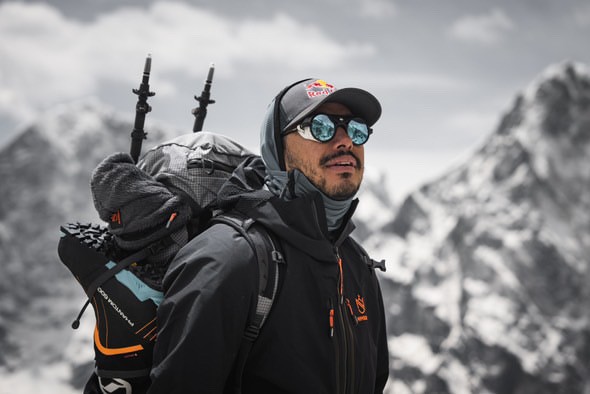
Photo courtesy of Nirmal “Nimsdai” Purja
“As a rescuer, it is crucial to understand your limits and know what you have in your tank. Overcommitting can turn you into a liability rather than a lifesaver. If you are confident in your abilities and can carry out a rescue without compromising your own safety, you must act. Remember, there are families waiting for their loved ones—wives, children, husbands, parents, etc —whose lives depend on your courage. However, always be aware of your own capabilities; if you overestimate yourself and become a problem, it could double the risk. Effective rescues require both bravery and self-awareness; one careless decision can complicate a situation and put more lives at stake.”
Nick Arding
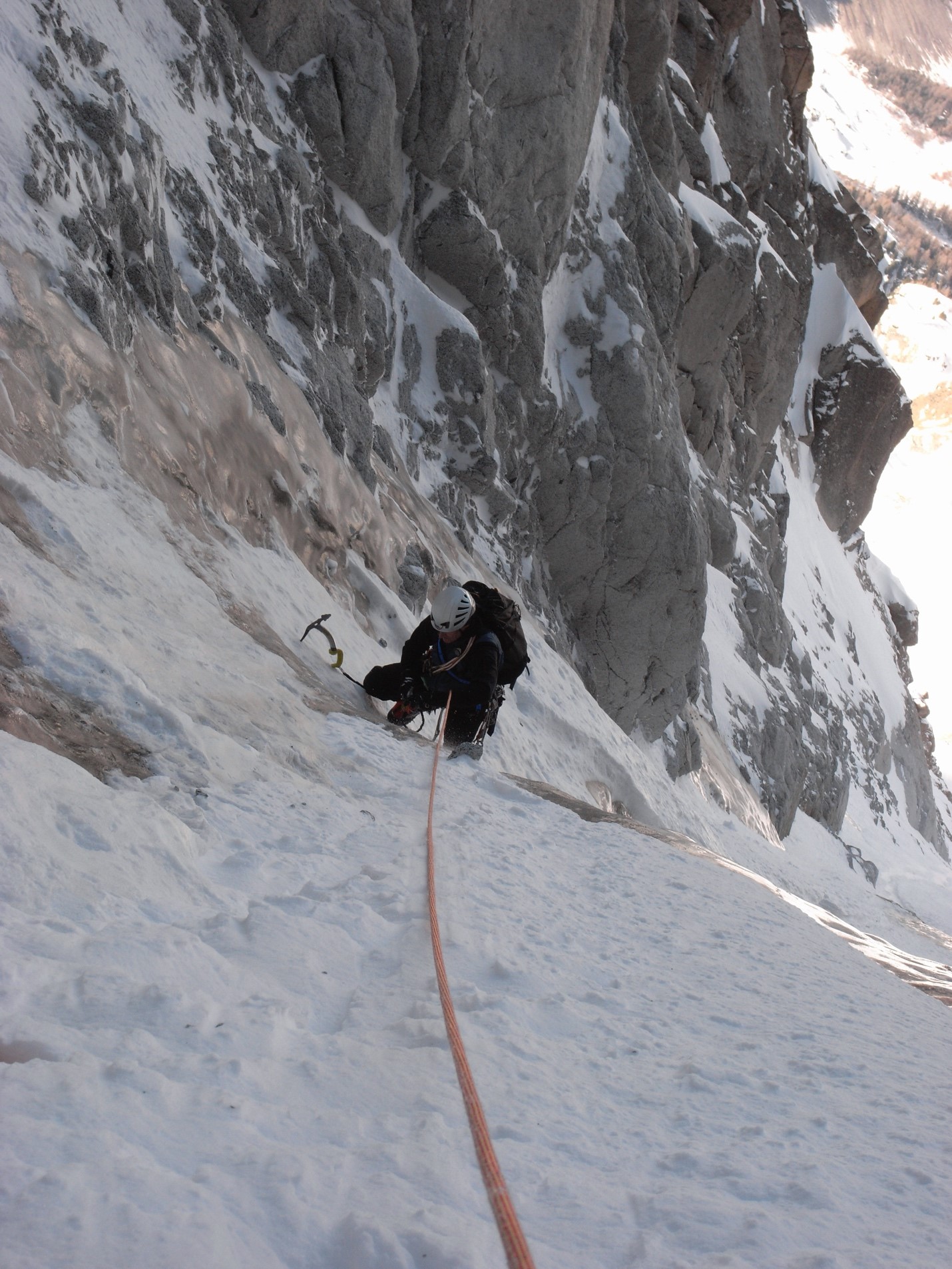
Photo courtesy of Nick Arding
“Everest is not somewhere that rescues normally take place. Not because people don’t get into trouble but because - at a height of 8000 meters - everyone is fighting for their own survival.” says Nick Arding, Former Lieutenant Colonel in the Royal Marines. His UK Royal Marines/Navy team famously abdicated an Everest summit bid in 2003 to rescue a climber with a fractured femur from a high camp. The team agreed ahead that they would stop and rescue anyone injured. “You just don’t rescue people at that altitude and then go on to summit yourself – it is one or the other – we knew that.”
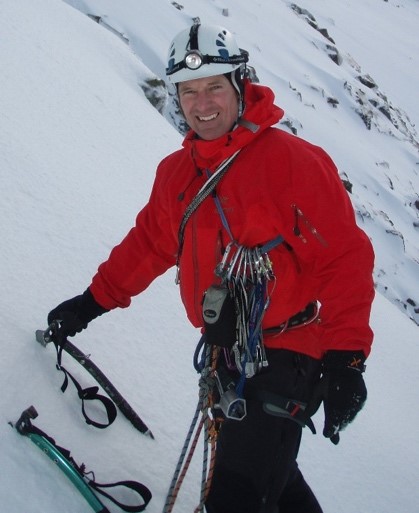
Photo courtesy of Nick Arding
Andy Miller
“Going into any adventure, there is a realistic chance your ambition is curtailed by the reality at hand. Whether that is weather, illness or someone in need of aid. I have always stopped to render assistance when needed,” says Flight Medic and World Extreme Medicine (WEM) Faculty Andrew Miller. Miller is known for abdicating a climb on Ama Dablam in Nepal to solo rescue a fellow climber. “I understand the dilemma for someone who has spent years saving and training – or they are a professional athlete, and this is their job - but I am not routinely doing anything that has not been done before – so I can easily pivot – my new adventure becomes taking care of this person.” A climber was stricken with HACE (high altitude cerebral edema), and Miller knew what he had to do. He abdicated his climbing goals. “There was no doubt in my mind, the objective became safe descent for him”. Rescuing another can also have personal cost: Miller suffered frostbitten fingers during the rescue mission while setting up multiple ropes systems to get the climber safely down.
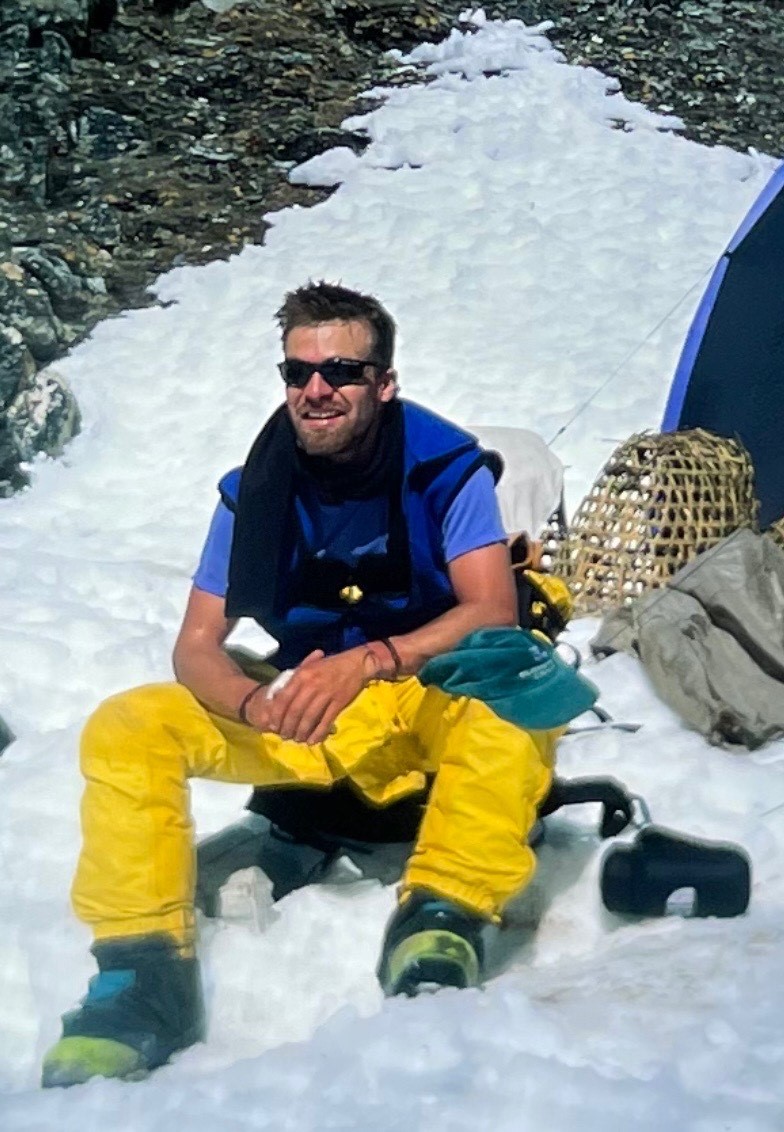
Photo courtesy of Andy Miller
Kevin Grange
Kevin Grange – national parks paramedic and author of Lights and Sirens, Wild Rescues, and Grizzly Confidential – says he also always stops to render aid when needed. “If I can save a life - then that becomes my objective. Whatever my previous objective was – just fades away.” He can imagine scenarios where he would not be able to assist. “There comes a point when the risk is too great to everyone else and you cannot intervene – such as jumping into boiling sulpher springs.” (Grange worked at Yellowstone National Park.) Grange has lost count of the number of times he has stopped to render aid. “However, the first rule of EMS is - is the scene safe enough? If the scene is not safe enough - then you must consider the greatest good for the greatest number of people.”
Grange was in Bhutan when he noticed someone in worsening distress. “She finally voiced she was sick. I decided to stay behind with her with the thought that we would slowly catch up.” Catching up proved impossible and a lesson learned was to always keep rescue supplies on hand. She became quite ill and other hikers stepped in to assist. “We ended up carefully hydrating her and simulating descent in a Gamow Bag.”
Jamie Pattison
Humberside Search and Rescue Paramedic, Northumberland National Park Mountain Rescue Team Leader, Jamie Pattison, has a unique dual perspective. “I have the privilege of being the first person medevac’d off a WEM course in Finnmark as a patient – I had pneumonia”. WEM is an organization for which he would go on to teach and lead courses. “Being medevac’d is a tremendously isolating experience. You are laying there in a hospital bed, in the middle of nowhere, thousands of miles from home, you don’t speak the local language; truly I have never felt more alone in my life”. Eight years later he would personally medevac a patient while leading a course - to the same remote hospital. Pattison was not obligated by duty to escort the patient- but he handed control of the rest of the course to a colleague and did so with profound empathy for the patient experience. “I had to go with him - knowing how scary and lonely of an experience it is.”
Jamie is adamant it is worth it. “Since I was a kid, I have liked to sort out problems for people - whatever it is. It’s your moral compass - and what it takes for you to sleep at night. I have these skills and it makes me feel pretty good to help when I am needed.” Pattison and his friends alter their plans a few times a month to assist others.
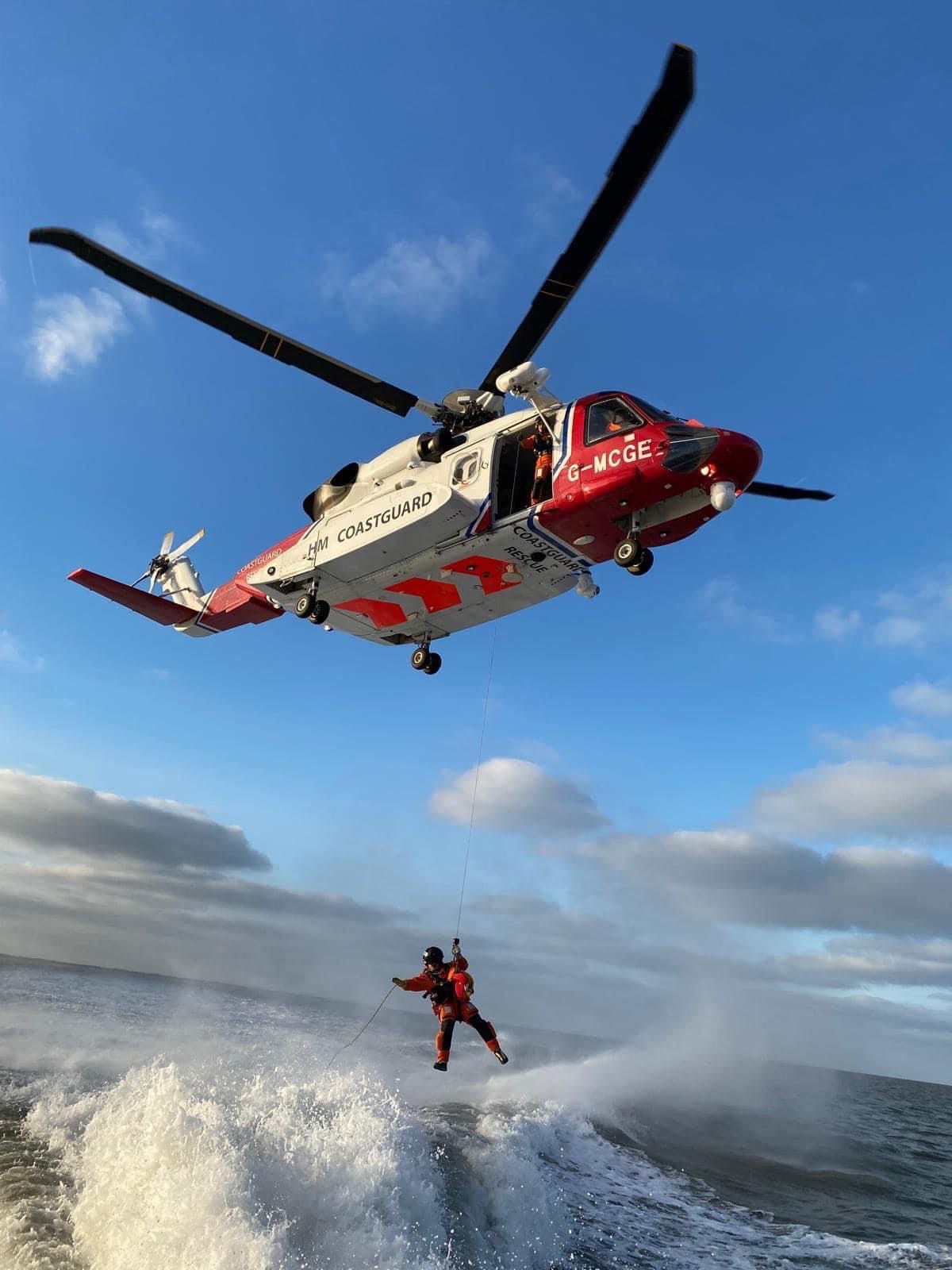
Photo of Jamie Pattison courtesy of Caistor Lifeboat Crew
Faye Lee
Surfer Nicole Lynch’s terrifying ordeal began when her surfboard fins hit her abdomen. “The blow caused intense blunt trauma.” Initially, it seemed a painful but manageable injury. However, Dr. Faye Lee, who was present at the scene, quickly assessed the situation and suspected something far more serious - convincing Nicole to evacuate to definitive care. Dr. Lee’s intuition proved vital when imaging revealed a tear in Nicole's abdominal aorta—a life-threatening injury that required immediate surgery. Dr. Lee’s perspective on the duty to act: "I do not think we always have an official duty…but I have always found myself happy to, and more than willing to, help." Dr. Lee’s global adventures have exposed her to countless emergencies, from the Arctic to the Antarctic to every continent, where she has repeatedly stepped in to aid others, driven by a commitment to care that transcends formal obligation.
Legality
“Good Samaritan Laws” in the US protect people who render aid in emergencies from legal liabilities. In Vermont, Rhode Island, and Minnesota, individuals are required to render aid – often called “Bad Samaritan Laws”. UK ISAR (International Search and Rescue) nurse Deb Swan, who deployed to earthquakes disaster zones in Turkey and Morocco says, “In the UK, if you do not stop to help someone who is injured, whether by the side of the road or in the wilderness, you can lose your medical license.”
Legal obligations to render aid depend on local laws, while moral obligations vary by individual and situation. Acts of selflessness and courage highlight our shared humanity, showing how ordinary people can demonstrate extraordinary bravery, transcending fear to protect one another. Each heroic act in the wild serves as a beacon of hope, inspiring others to embrace responsibility and compassion as cornerstones of outdoor adventure. If we can safely render aid – we must not sacrifice selflessness for the summit.