The WMS headed to Snowbird, Utah, this summer for the 8th World Congress on Mountain & Wilderness Medicine with ISMM. The event included over 550 in-person and virtual attendees from 23 different countries. Below we hear from the Student and Resident Ambassadors on their first-time experiences at a WMS conference!
As I stepped out of the car in Little Cottonwood Canyon, I stared up at the rock faces that more than doubled the elevation of the mountains back home in Roanoke, Virginia. This was my first Wilderness Medical Society conference, but I was fortunate to attend with a legendary group of mentors from Virginia Tech Carilion, whose stories of wilderness medicine adventures inspired me to take time away from a busy medical school schedule to learn more about this field that joins my passions for medicine and the outdoors. The mountains have always evoked a feeling of inspiration in me and symbolized a call to step into the unknown with the promise of growth on the other side. The Snowbird skyline seemed like the perfect backdrop for a conference that would provide both by the end of the week.
My week started with the student and resident hike, led by Dr. Carver Haines and Dr. C.J. Waasdorp, up to a waterfall near Hidden Peak. A pack of physicians, APPs, nurses, and medical students from all over the country trudged up the trail, sharing stories, advice, and laughs between gasps for air. To other hikers, it would have been easy to mistake us for a group of friends reuniting on summer break, sharing our medical school war stories over some “type two fun”. These early connections, which only strengthened throughout the week, were one aspect of the WMS conference that I had not experienced at any other conference. From faculty who are internationally renowned to medical students like me who are just beginning the journey, everyone was welcoming and excited to learn about something they love.
This camaraderie was further exemplified when I volunteered at the Wilderness Life Support for Medical Professionals course as a simulated patient. Dr. Jessica Gehner was teaching the management of a patient with high-altitude cerebral edema and an ankle injury that prevented ambulation. It was fascinating to be the “patient” as groups of providers cycled through our station, implementing the skills they had learned just hours before. I have been fortunate not to have been on the receiving end of any accidents in the backcountry, so getting to partially experience the perspective of a patient being rescued was eye-opening beyond the medical knowledge I gained. It also provided great field context to the many insightful lectures that followed in the subsequent days.
From pulmonary physiology to Boyle’s law, the next few days were filled with hardcore medicine that allowed me to apply the classroom knowledge I was learning in my medical school curriculum to real-world wilderness scenarios. The long days were complemented by lots of fun in the mountains as well. One experience that stood out was climbing at sunset in Big Cottonwood Canyon with some new friends from the conference. This balance of rigorous medicine and inspiring wilderness adventure embodies what wilderness medicine means to me. As I boarded the plane in Salt Lake City, I felt a renewed passion for what my future career as a physician could look like beyond the walls of the hospital and was grateful to have found this amazing community!
-Justin O’Leary MS-II
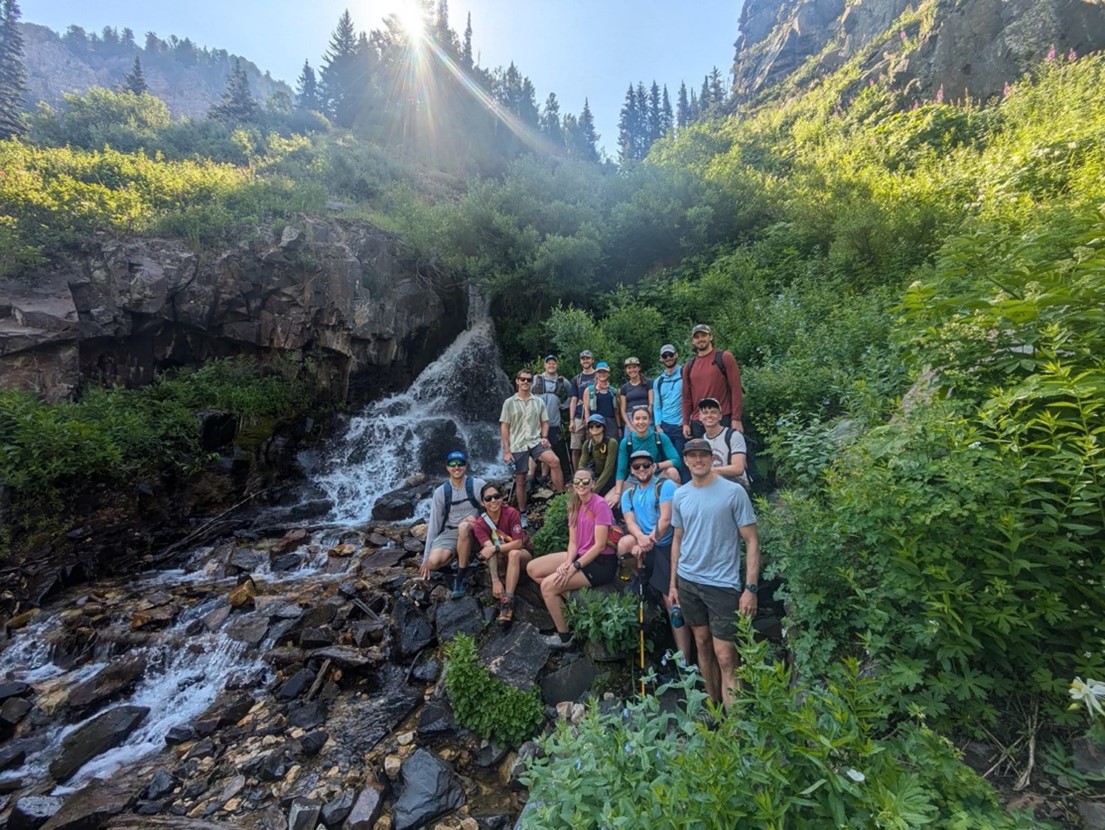
Student and Resident Welcome Hike led by Dr. Carver Haines and Dr. CJ Waasdorp. (Justin O’Leary)
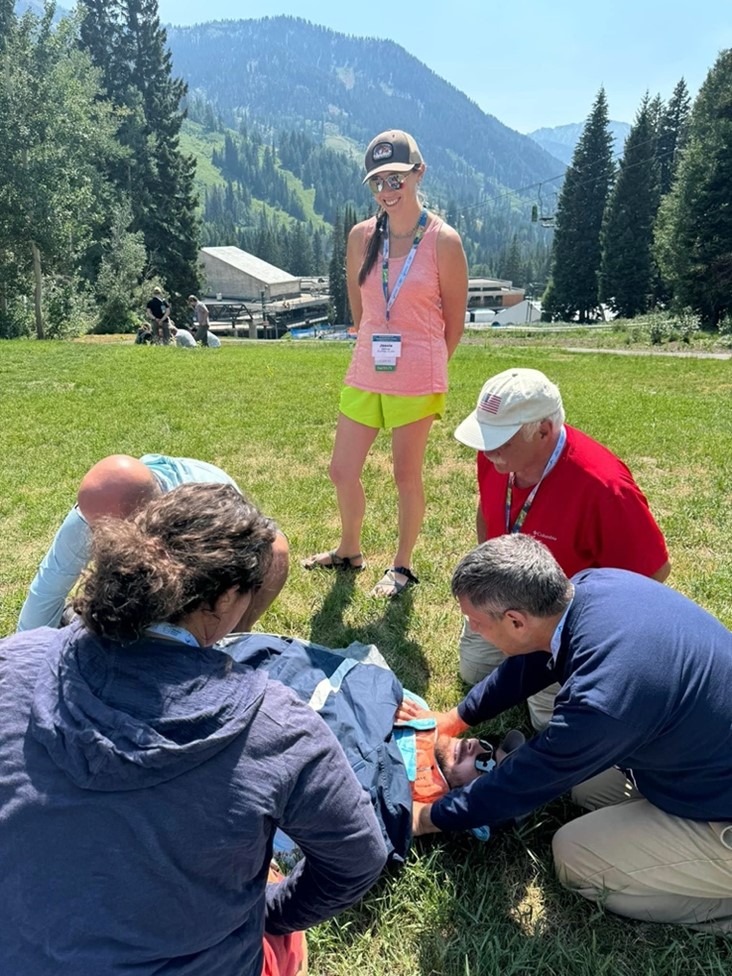
WLS: MP High Altitude Cerebral Edema Scenario taught by Dr. Jessica Gehner. (Justin O’Leary)
Strapped to a backboard with my leg splinted and two tourniquets wrapped around my arm, I couldn’t stop smiling. I was finally at a WMS conference! Ever since I first learned about this community, I hoped to make it to one of their events. And now here I was – doing my part in a Wilderness Life Support class as the “victim” of an unfortunate bear mauling incident.
Within a few hours of arriving at Snowbird, I was up in the mountains on a hike with other first-time attendees. As we climbed up the world-class ski resort, the trail filled with huffs, puffs and excited conversation about our shared outdoor pursuits and anticipation for the upcoming week. These were my type of people!
In between explorations of the surrounding area, I attended a variety of lectures and workshops. They were just as wild and diverse as the canyon around Snowbird, ranging from dramatic case reports in the mountaineering world to the intricate anatomy of a trail running shoe. I was particularly drawn to a discussion of psychiatry in the high-altitude environment, which resonated with my ongoing psychiatry clerkship. I focused intently on the material, eager to share it with my colleagues back home in Upstate New York.
My favorite part of the week came during a morning trail run. After waking up around 4am and climbing over 1,000 feet with some new friends from the conference, we were rewarded with a stunning sunrise over the Wasatch. If that wasn’t enough, about a mile away from the parking lot we were gifted with a view of a mother moose and her calf! This experience, along with the entire conference, left me feeling deeply grateful for this incredible opportunity. I can’t wait for the next one!
-Nate Barott, MS-II
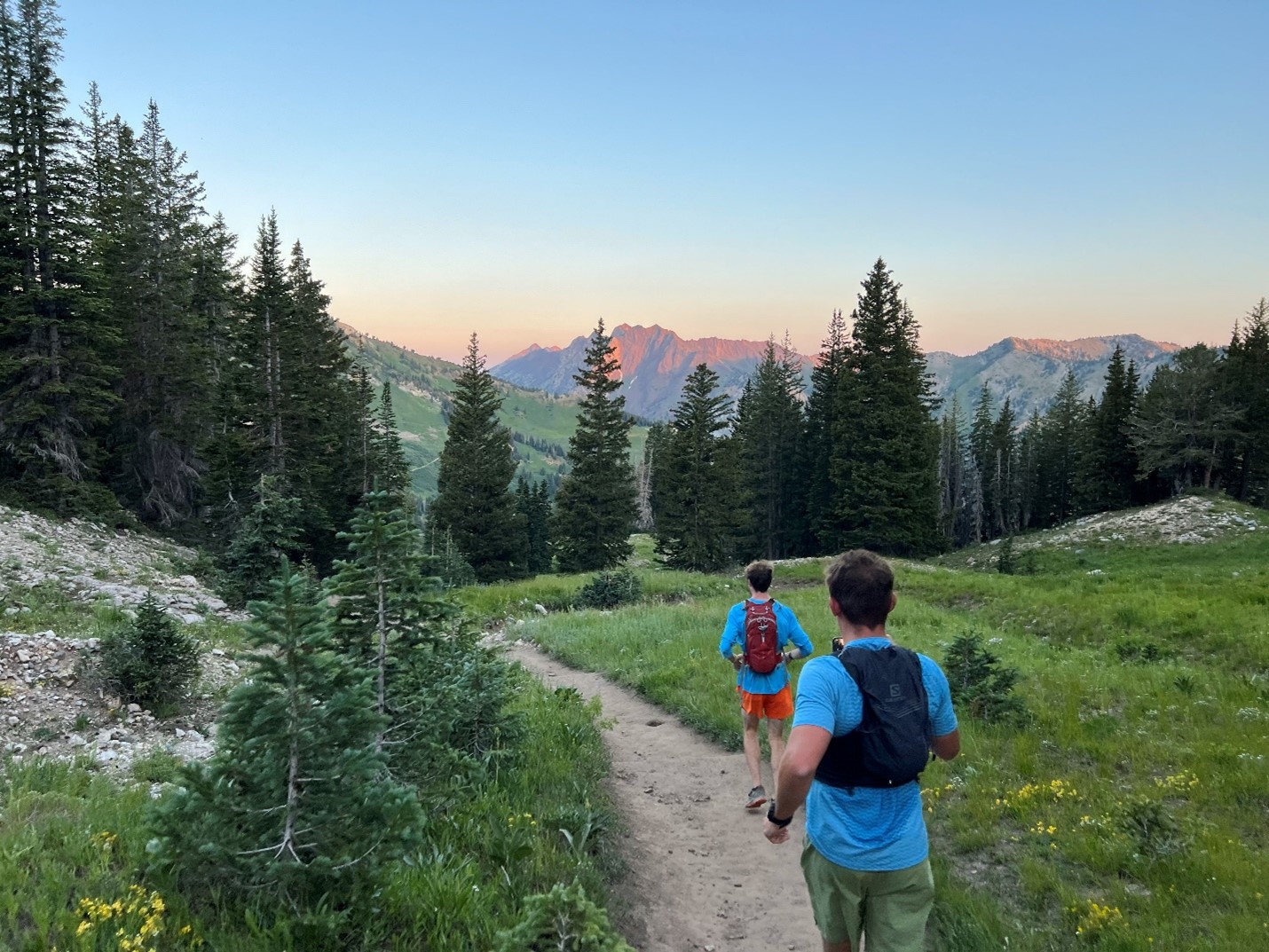
A morning trail run before the first round of lectures begin. (Nate Barott)
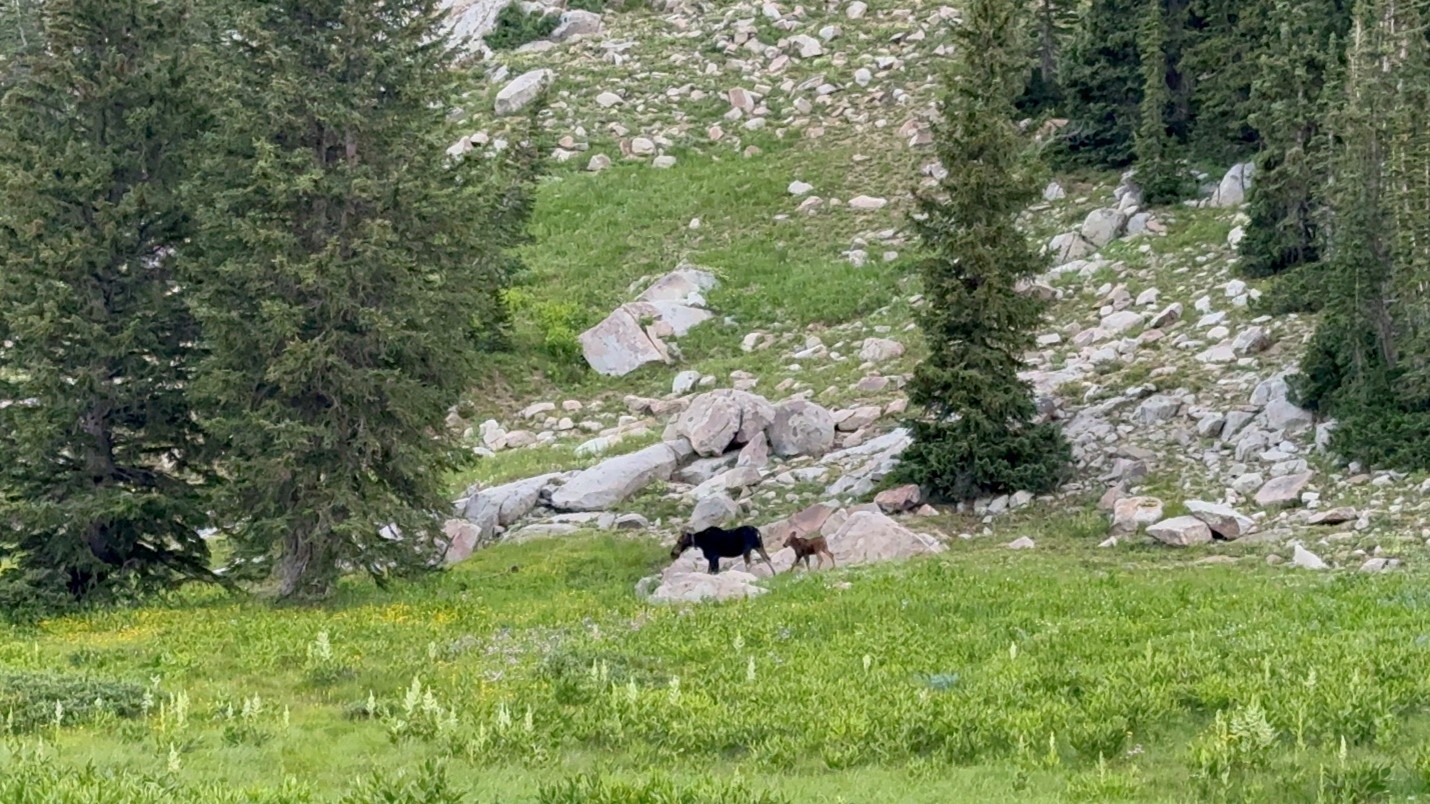
Mother and baby moose spotted about a mile from the conference. (Nate Barott)
When the term “corpscicles” is thrown out in the beginning lecture of a conference, you know you’re in for a great time! With the beauty of the Wasatch Mountains of Utah as the backdrop, the 2024 Summer WMS Conference brought together medical practitioners and experts from around the globe, sharing their passion of medicine in the wilderness. Participants were encouraged to participate in a variety of hands-on, engaging workshops and learning sessions, with topics ranging from alpine rescues, moulage bear attacks, caving expeditions, diving, helicopter rescue, and much more. There are few other conferences that promote, let alone allow, these types of experiences. There was a great sense of comradery and thrill in the unique lives of those who study and practice medicine in the remote and wild places of the world. I was able to meet so many interesting people, practice cool techniques, and learn more about the specialty of wilderness medicine, in one of the most beautiful natural places in the world.
The breadth of knowledge and experience shared by the world leaders in wilderness and mountain medicine was very evident, through the course of lectures and events. The highlight of the conference for me, however, was the individual workshop events that I was able to attend. The small group settings and one-on-one instruction proved to be an experience that was not only informative, but wildly fun. The friendliness and intellect exhibited by the instructors for these workshops exemplified the humor, experience, and willingness to educate that I have come to associate with all wilderness medicine practitioners. And as a first-time attendee, it provided an opportunity to connect with other practitioners personally.
I was fortunate enough to be part of the “Dive Medicine” and “Hypothermia at Altitude” workshops. In the dive medicine workshop, Kirsten Hornbeak and Dan Goldan quickly had everyone in the room participating in case exercises and having in-depth discussions regarding treatment plans for a variety of dive scenarios. My favorite part was the breath-holding exercises and attempt at eliciting the mammalian dive reflex to slow heart rate. How many medical conferences have you attended that had you dunking your head in a tub of ice water? The “Hypothermia at Altitude” workshop was expertly led by John Ellerton, who brought his vast experience as a mountain medicine authority to engage the group together to puzzle through difficult cases and scenarios. The workshop ultimately led to the simulated rescue attempt of a patient suffering from cardiac arrest on an inhospitable mountain top in the middle of a blizzard. It must have been a strange experience for the regular attendees of the Snowbird Lodge to see ten people frantically carrying a litter up and down a path, while intermittently stopping for chest compressions and rescue breaths performed on a life-size dummy. What stuck out to me, however, as one of those people carrying the litter, were the faces of my colleagues beaming with big smiles, each enjoying the experience as much as I was.
It was an honor to be an Ambassador for this conference. I greatly look forward to my continued education and involvement with the WMS and wilderness medicine community.
-Hayden Bush, DPM
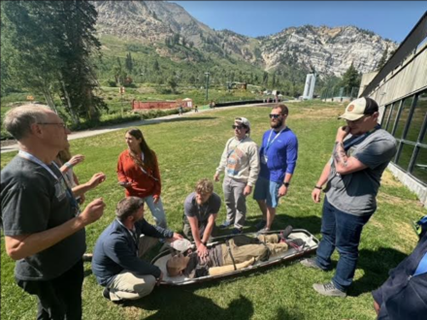
Simulated rescue of a cardiac arrest patient with hypothermia on top of a mountain in a blizzard. (Hayden Bush)
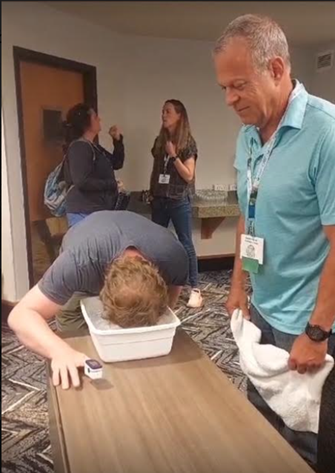
Testing the "mammalian dive reflex" to slow heart
rate. (Hayden Bush)