Project NEPTUNE 100 is a groundbreaking endeavor in human endurance and adaptation. Dr. Joseph Dituri, aka Dr. Deep Sea, set an unprecedented Guinness World Record spending 100 days underwater at 1.67 ATA (atmospheres absolute) within the Jules Undersea Habitat at the Marine Lab in Key Largo. This ambitious project delves into the realm of Isolated Confined Environments (ICE) such as the International Space Station and other undersea habitats and explores the multifaceted impacts of increased atmospheric pressure on the physiological and psychological well-being of an individual. The mission flew an Explorers Club Flag presented by Ian Koblick. Mission Command was led by Thane Milhoun.
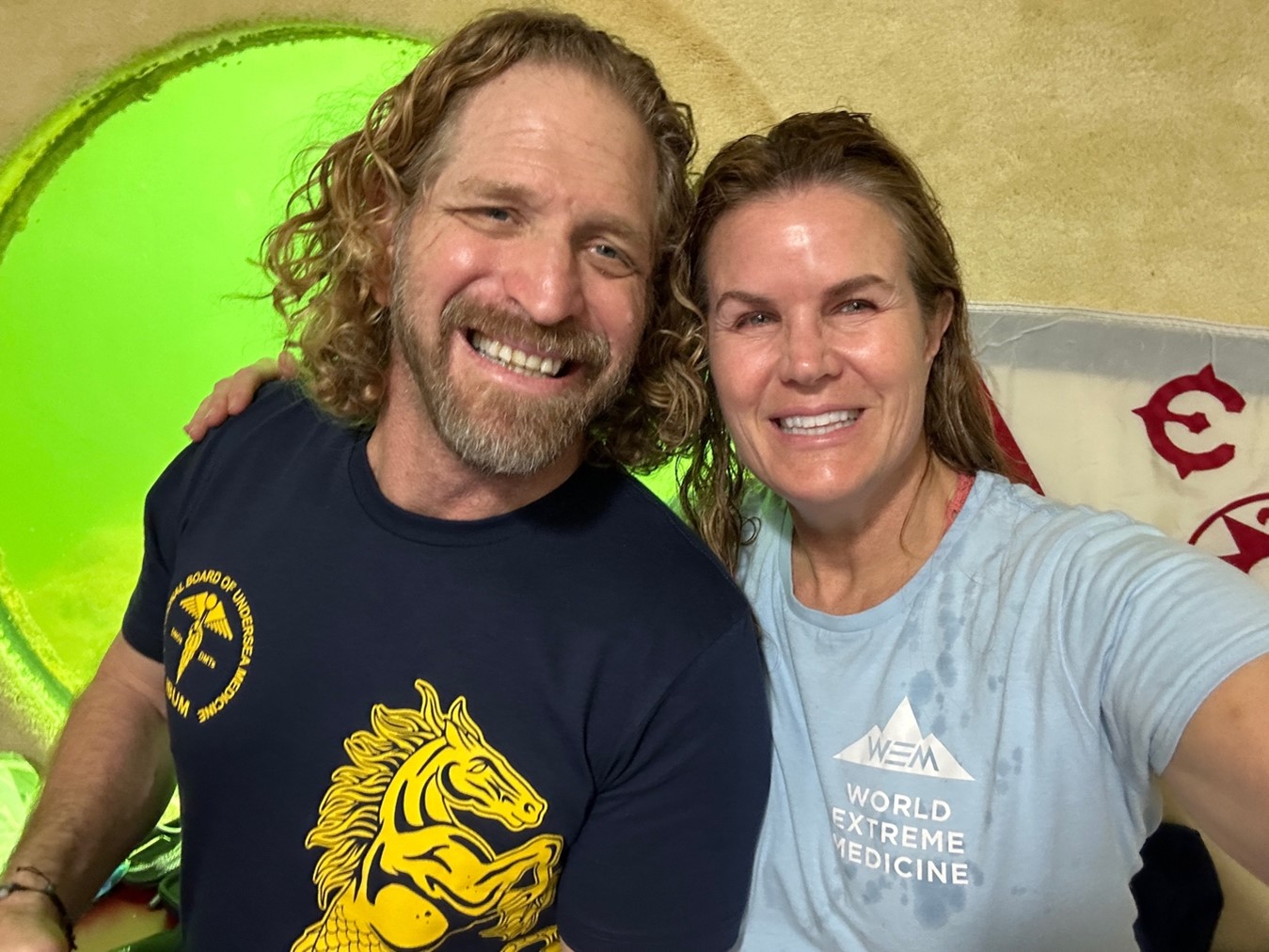
Guinness World Record holder Dr. Joseph Dituri and Project NEPTUNE 100 Medical Lead Dr. Sarah Spelsberg in front of the iconic undersea window of the Jules Undersea Habitat with The Explorers Club Flag (Source: Sarah Spelsberg)
My role as Medical Lead in this project included logistics for research data acquisition, prevention of medical issues that could jeopardize the mission, assigning tasks to team members, and creating the medical kit including prescription medications that would travel down to the habitat with Dr. Dituri. I was available 24/7 to zoom consult if there were any issues. I ordered labs and coordinated with phlebotomists to assist us in processing samples for transport. I would personally fly to Miami, drive to the Marine Lab, scuba to the habitat at timed intervals to draw blood, collect urine and saliva, and then race against time to meet phlebotomists in off hours to get samples processed and shipped – on dry ice – to the lab. Dr. Dituri and I amassed a team of specialists we trusted to have on standby for phone calls if needed. When you are tasked with an incredible opportunity and challenge, I highly recommend seeking out people who are smarter than you!
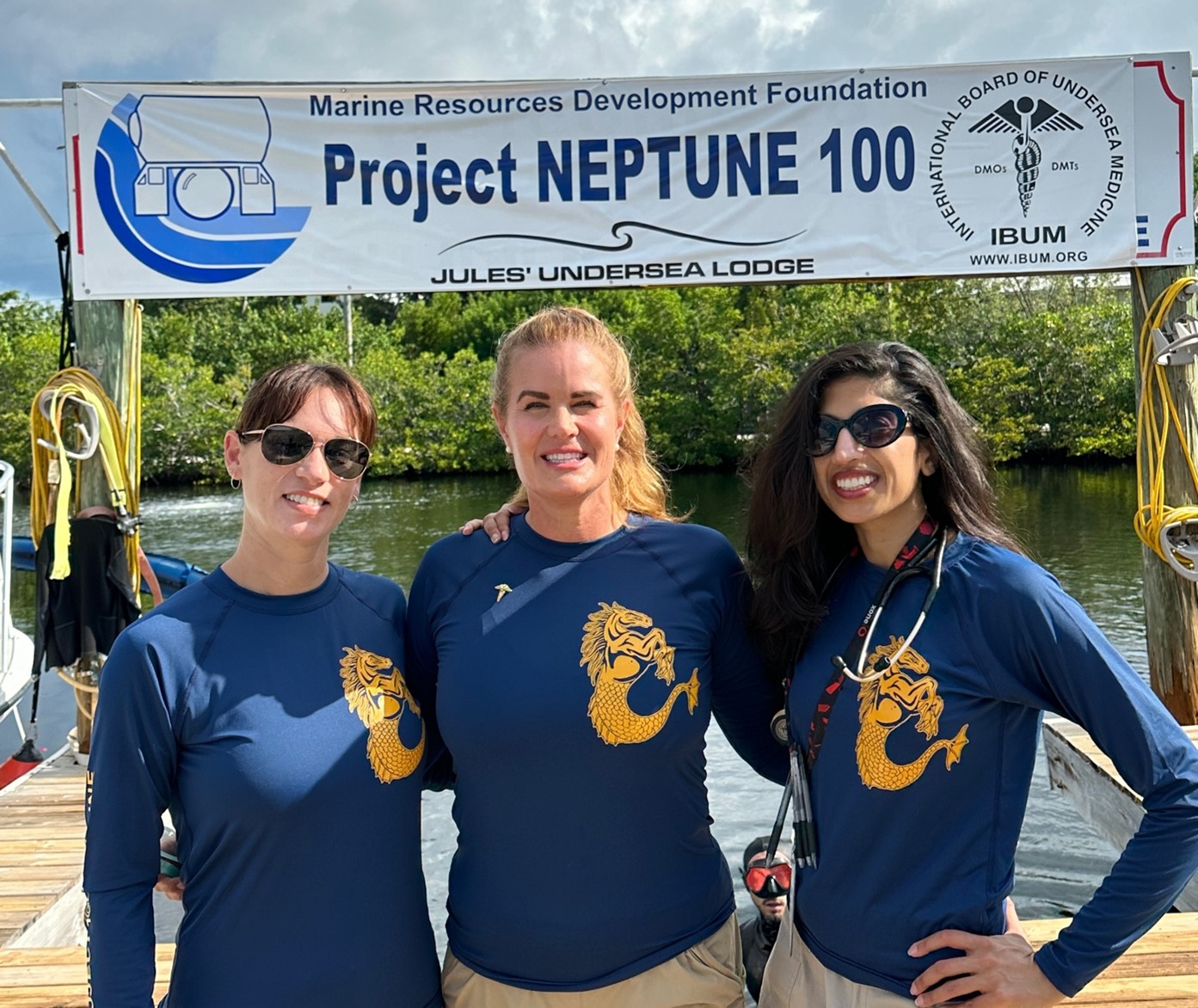
Dr. Sara Filmalter, Dr. Sarah Spelsberg, and Dr. Shawna Pandya in front of the Project Neptune 100 sign overlooking the habitat lagoon awaiting the surfacing of Dr. Dituri on June 9, 2023. (Source: Sarah Spelsberg)
NEPTUNE 100 presented a unique set of challenges. The isolation and confinement of the underwater environment posed significant obstacles to delivering in-person medical care, while also highlighting the potential of telemedicine solutions for remote healthcare management on expedition. In-person medical coverage for Project NEPTUNE 100 required careful planning and preparation due to the limited resources and space available within the undersea habitat. The remote location of the habitat meant that traditional medical supplies and equipment had to be carefully selected and stocked in advance or transported down in waterproof pressure proof containers during Dr. Dituri's extended stay. How many doctors do you know get to scuba down to their patients? It was amazing.
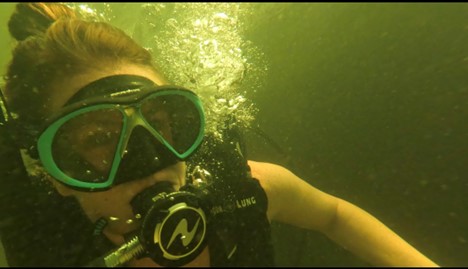
Dr. Spelsberg scuba-diving down to the habitat for a house call. (Source: Sarah Spelsberg)
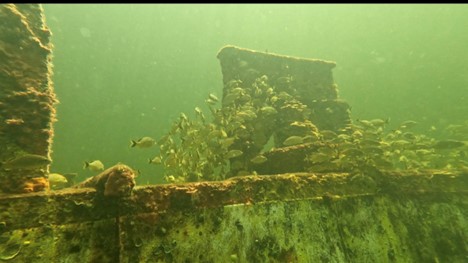
The fish that call the top of the Jules Undersea Lodge habitat home. (Source: Sarah Spelsberg)
The medical kit hardware consisted of a Butterfly Inc Ultrasound Device, AliveCOR Kardia 6 L ECG, OURA ring fitness tracking device, ARCLight ophthalmoscope/otoscope, EEG and PFT devices, and standard vital signs monitoring units. A medical kit was also supplied including SAM Medical splint and tourniquet, basic wound care supplies, and a small medication dispensary including Ofloxacin eye drops, Amoxicillin, and other commonly used medications.
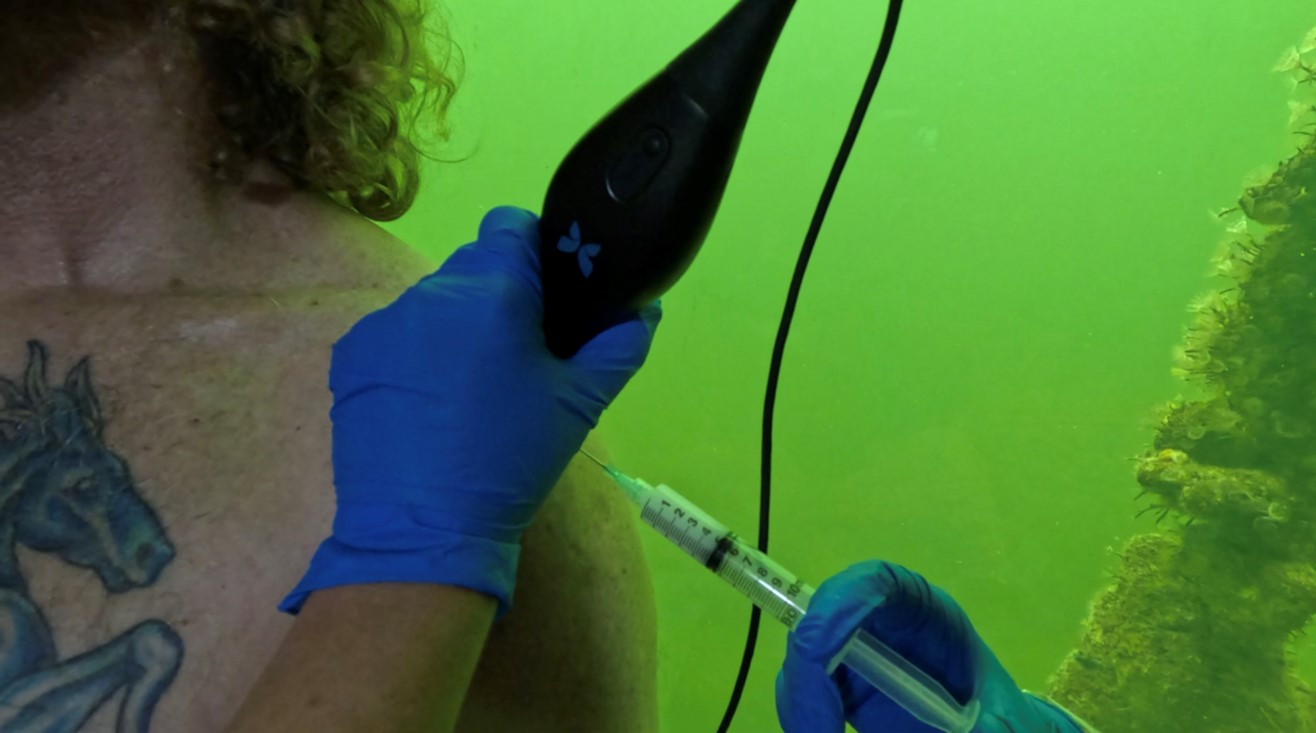
The Butterfly Handheld Ultrasound is utilized to do a shoulder injection in the habitat. (Source: Sarah Spelsberg)
There was significant increase in back pressure on injections and blood draws.
The medical team had three scheduled in-person checkups where we would dive down to the habitat. On one in-person visit, Dr. Spelsberg and sports medicine physician, Dr. Sara Filmalter, got to spend 24 hours in the habitat with Dr. Dituri and become official Aquanauts!
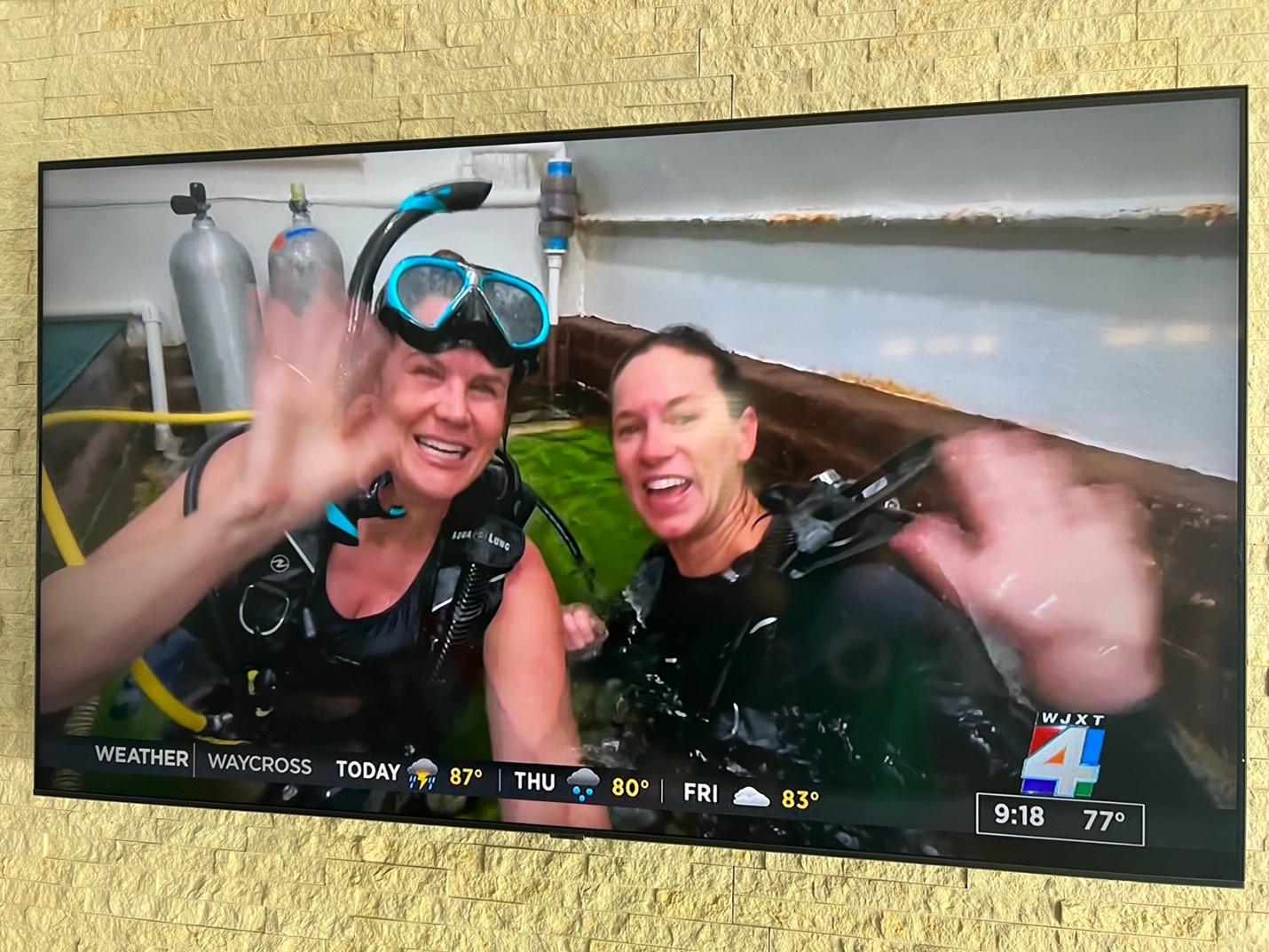
Dr. Spelsberg and Dr. Filmalter surfacing in the moon pool of the Jules Undersea habitat. (Source: Sarah Spelsberg)
One particular concern were the air and fluid dynamics transporting blood and other samples to the surface without them exploding. The team sent up several trial samples of water in vacutainers to assess the extent of the expansion of the fluid from depth to surface.
Telemedicine played a crucial role in bridging the gap between the undersea habitat and medical professionals on the surface. Dr. Dituri was able to consult with healthcare providers in real-time, discuss medical concerns, and receive guidance on treatment options. We were able to assess Dr. Dituri using self-ultrasound of soft tissue, heart, lungs and joints with the handheld point-of-care ultrasound device allowing the team to review the transmitted images. Using the ARCLight we were able to perform a fluorescein-enhanced eye exam of a possible corneal abrasion. Telemedicine not only facilitated remote diagnosis and monitoring but also enabled immediate access to medical expertise and support, enhancing the overall quality of care for Dr. Dituri throughout the mission.
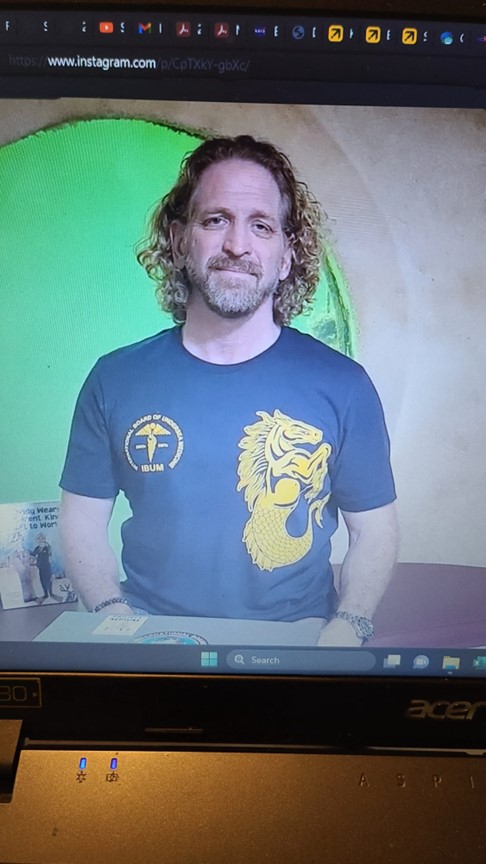
Telemedicine via video conferencing, usually Instagram video chat, to check in on Dr. Dituri. (Source: Sarah Spelsberg)
A key concern that arose during Project NEPTUNE 100 was the risk of decompression sickness upon resurfacing after the 100-day mission. Decompression sickness, also known as "the bends," can occur when divers ascend too quickly and nitrogen bubbles form in the bloodstream and tissues. I spent a lot of time contemplating the implications of this. Dr. Dituri's prolonged exposure to increased pressure in the undersea habitat raised the potential for decompression concerns upon returning to the surface, underscoring the importance of a carefully managed decompression protocol and close medical monitoring during the ascent. Dr. Dituri is a retired Navy Commander and Dive Specialist whose expertise in hyperbaric medicine and decompression illness was paramount in devising the decompression plan. There are case reports of individuals enduring decompression illness after just 24 hours at this depth and the effects of a 100-day stay were largely unknown. Dive tables for the duration of this dive do not exist! Ultimately, we decided to have him breathe 100% oxygen for a period of time in the habitat, he then exited the habitat (10m below sea level) and commenced a very gradual ascent over several hours assisted by oxygen tank resupplies. We performed a brief neurological exam upon surfacing and then cleared him to speak with the extensive media presence that had gathered at the habitat before going for a more in-depth physical exam and testing.
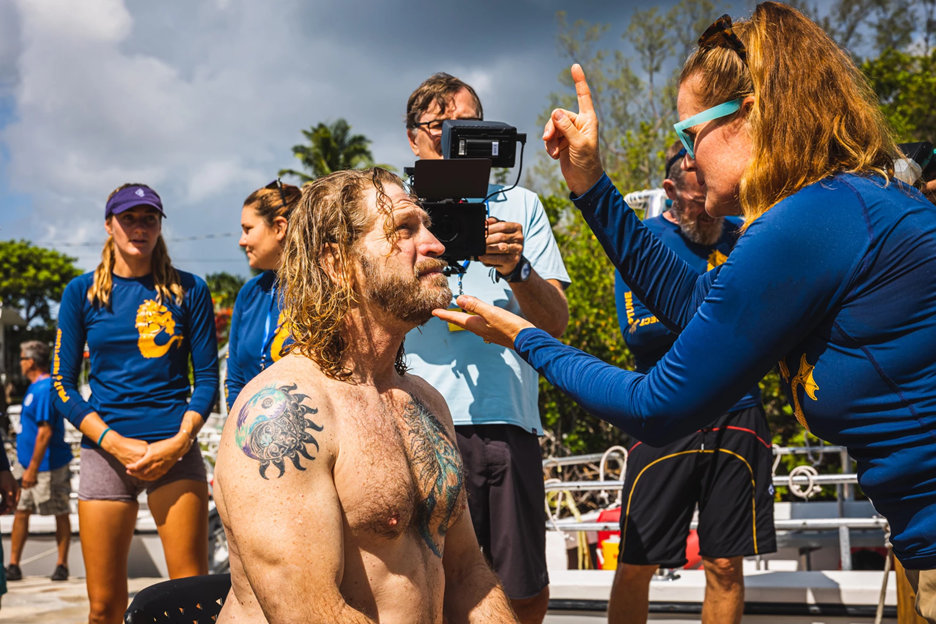
Dr. Spelsberg performs neurologic testing on Dituri upon surfacing. (Source: Brock Communications).
We collected thousands of data points. The bad news was that Dr Dituri got shorter and his height did not return to normal until a zero G flight! His eyesight deteriorated but this returned to normal after a few weeks. Pulmonary function tests gradually decreased- which may have been confounded by an upper respiratory infection. Did we reach the limits of pulmonary oxygen toxicity? Many of our findings raise potential for future studies. The good news was that his deep and REM sleep cycles doubled in duration, scores on PTSD and traumatic brain injury tests improved, testosterone increased, and inflammatory markers decreased – in particular interleukin 6 which is implicated in the deadly cytokine storm associated with COVID-19 and other illnesses. The decrease in inflammatory markers raises the potential for hyperbaric oxygen to be used as an adjunct therapy in Crohn’s Disease, ulcerative colitis, lupus, rheumatoid arthritis and other autoimmune and proinflammatory conditions. All in all, as each round of testing results came through to me, I grew more and more excited. Watching the inflammatory markers go down each month was thrilling. I went into this project with few preconceived notions and I was surprised by the results. The full research paper is coming soon and we are working on scheduling The Explorers Club Flag Return presentation.
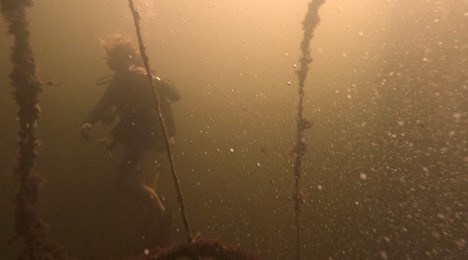
Dr. Dituri on a dive external to the habitat. It felt like a NASA astronaut spacewalk from the International Space Station. The mission involved a combination of wet and dry diving for 100 days. (Source: Sarah Spelsberg)
The integration of in-person and telemedicine medical coverage in Project NEPTUNE 100 exemplified the evolving landscape of healthcare delivery in extreme environments. The successful management of Dr. Dituri's health and well-being during his undersea mission highlighted the effectiveness of a comprehensive approach that combines traditional medical practices with innovative telemedicine solutions. In conclusion , the challenges of providing medical coverage for Project NEPTUNE 100 and the logistics of obtaining research specimen underscored the importance of adapting healthcare delivery and research to meet the unique demands of extreme environments. The successful combination of in-person and telemedicine solutions demonstrated the value of a comprehensive multidisciplinary approach to managing the health and safety of individuals in isolated and confined settings. The lessons learned from Project NEPTUNE 100 serve as a valuable foundation for shaping the future of healthcare in extreme environments as we adventure further into space and deeper in our oceans. It was an honor for this team to be involved in this groundbreaking endeavor!
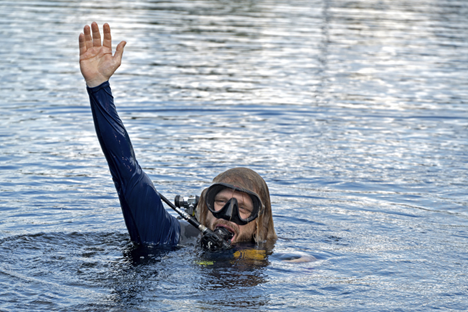
In this photo provided by the Florida Keys News Bureau, diving explorer and medical researcher Dr. Joseph Dituri surfaces Friday, June 9, 2023, after living for 100 days in the Jules' Undersea Lodge marine habitat at the bottom of a lagoon in Key Largo, Fla. Dituri broke the previous 73-day record for underwater human habitation at ambient pressure, undertook medical and marine science research and interacted online with more than 5,500 students during his Project Neptune 100 mission organized by the Marine Resources Development Foundation. (Source: Andy Newman/Florida Keys News Bureau via AP)
Thank you to the team of medical professionals and supportive institutions who made this expedition run so smoothly: Joseph Dituri, Sara Filmalter, Dana Herrigel, Michael Ott, Klaus Torp, Burjor Langdana, Thomas Flipse, Justin Gardner, Dwight Jones, Peter Weimersheimer, Peter Lee, Daniel Montero, Pavandeep Singh, Julia Curtis, Will Duffin, Eoin Walker, Anne Stokes, Shawna Pandya, Mark Hannaford, Alton Robey, Alex Jones, Thane Milhoun. the entire World Extreme Medicine crew, Wilderness Medical Society, UNC Southeastern Emergency Medicine, Mayo Clinic, Divers Alert Network, The United States Coast Guard, The United States Navy, and The Explorers Club.